
🌿 Complete Seasonal Plant Care Guide
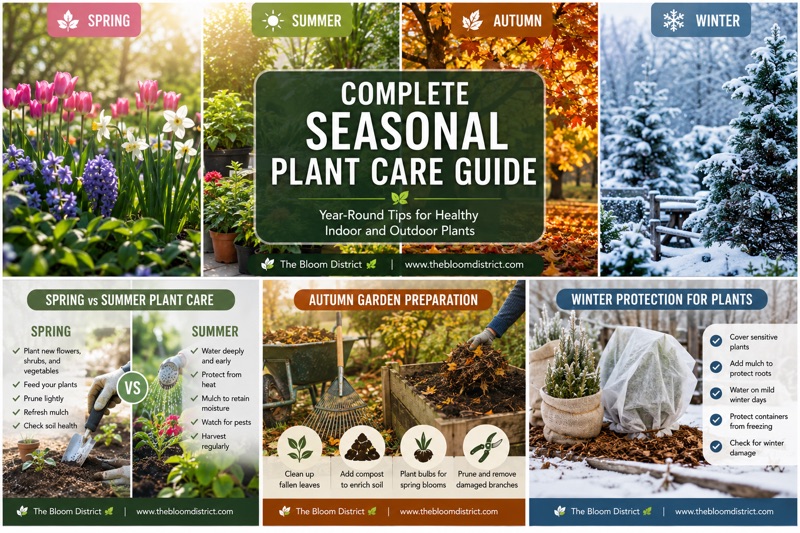
Plants don’t have the same needs all year long. A watering routine that works in spring may harm plants in winter, while fertilizer that encourages lush summer growth may be unnecessary during dormancy. Understanding seasonal changes is one of the most important skills every gardener can develop.
This complete guide walks you through each season, helping you adjust your plant care routine so your garden and houseplants stay healthy, resilient, and beautiful year-round.
📋 At a Glance
|
Season |
Main Focus |
Watering |
Fertilizing |
Pruning |
|
Spring |
New Growth |
Moderate |
Start feeding |
Light shaping |
|
Summer |
Heat Protection |
Deep, frequent |
Continue if needed |
Minimal |
|
Autumn |
Preparation |
Reduce gradually |
Stop late season |
Remove damaged growth |
|
Winter |
Dormancy |
Minimal |
Usually none |
Dormant pruning for some trees |
📚 Table of Contents
- Why Seasonal Plant Care Matters
- Spring Plant Care
- Summer Plant Care
- Autumn Plant Care
- Winter Plant Care
- Seasonal Care for Indoor Plants
- Seasonal Care for Outdoor Plants
- Month-by-Month Garden Checklist
- Common Seasonal Mistakes
- Frequently Asked Questions
- Quick Summary
🌱 Why Seasonal Plant Care Matters
Plants respond to changes in:
- Temperature
- Sunlight hours
- Humidity
- Rainfall
- Soil temperature
- Growth cycles
Matching your care routine to these natural changes helps plants:
- Grow stronger roots
- Produce healthier leaves
- Bloom more consistently
- Resist pests and diseases
- Survive extreme weather
🌸 Spring Plant Care (The Season of Growth)
Spring is when most plants wake from dormancy and begin producing fresh leaves, flowers, and roots.
Spring Checklist
✅ Inspect plants for winter damage
✅ Remove dead leaves and stems
✅ Refresh mulch
✅ Begin fertilizing
✅ Repot root-bound houseplants
✅ Plant new flowers, shrubs, and vegetables
✅ Check irrigation systems
Watering in Spring
Water when the top layer of soil begins to dry.
Avoid overwatering during rainy weeks.
Fertilizing
Spring is the best time to begin feeding actively growing plants.
Suitable choices include:
- Compost
- Organic fertilizers
- Balanced slow-release fertilizers
Spring Pruning
Remove:
- Dead branches
- Winter-damaged stems
- Crossing branches
- Weak growth
Avoid removing too much new growth.
☀️ Summer Plant Care (Protecting Plants from Heat)
Summer brings rapid growth—but also intense heat, evaporation, and drought.
Summer Checklist
✅ Water early in the morning
✅ Apply fresh mulch
✅ Protect sensitive plants with shade cloth
✅ Watch for pests
✅ Harvest vegetables regularly
✅ Check containers daily
Summer Watering
Deep watering is more effective than frequent shallow watering.
Container plants often require more frequent watering than garden beds.
Protecting Plants from Heat
During heat waves:
- Add 2–4 inches of mulch
- Water deeply
- Avoid heavy pruning
- Delay fertilizing
- Provide afternoon shade for delicate plants
🍂 Autumn Plant Care (Preparing for Dormancy)
Autumn is the transition season.
Plants begin slowing their growth while storing energy for winter.
Autumn Checklist
✅ Remove diseased foliage
✅ Divide overcrowded perennials
✅ Plant spring-flowering bulbs
✅ Reduce fertilizer
✅ Clean garden beds
✅ Collect fallen leaves for compost
Watering in Autumn
As temperatures cool, reduce watering frequency while ensuring plants don’t completely dry out.
Soil Care
Autumn is an excellent time to:
- Add compost
- Improve soil structure
- Test soil pH
- Prepare beds for next season
❄️ Winter Plant Care (Rest and Protection)
Many plants enter dormancy during winter.
Growth slows dramatically, and maintenance needs decrease.
Winter Checklist
✅ Protect frost-sensitive plants
✅ Water only when necessary
✅ Inspect for winter damage
✅ Keep heavy snow from breaking branches
✅ Mulch around roots in cold climates
Indoor Winter Care
Indoor heating can reduce humidity.
Help houseplants by:
- Using a pebble tray
- Running a humidifier
- Moving plants away from heaters
- Rotating pots for even light
🏡 Seasonal Indoor Plant Care
|
Season |
Indoor Care |
|
Spring |
Repot, fertilize, increase watering |
|
Summer |
Protect from hot windows, monitor soil |
|
Autumn |
Reduce fertilizer, clean leaves |
|
Winter |
Water less, increase humidity, maximize light |
🌳 Seasonal Outdoor Plant Care
|
Season |
Outdoor Focus |
|
Spring |
Planting and fertilizing |
|
Summer |
Watering and heat protection |
|
Autumn |
Cleanup and soil improvement |
|
Winter |
Frost protection and dormant pruning |
📅 Month-by-Month Garden Checklist
|
Month |
Main Tasks |
|
January |
Protect dormant plants, inspect trees |
|
February |
Prepare tools, prune suitable trees |
|
March |
Begin planting cool-season crops |
|
April |
Fertilize and mulch |
|
May |
Plant warm-season vegetables |
|
June |
Water deeply and monitor pests |
|
July |
Protect plants during heat waves |
|
August |
Harvest regularly and maintain mulch |
|
September |
Divide perennials and plant bulbs |
|
October |
Add compost and clean beds |
|
November |
Protect tender plants from frost |
|
December |
Water sparingly and monitor winter conditions |
🌼 Best Seasonal Gardening Habits
- Observe plants regularly rather than following a fixed schedule.
- Water based on soil moisture instead of the calendar.
- Refresh mulch at least once a year.
- Clean tools between pruning sessions.
- Keep a simple garden journal to track bloom times, pest issues, and weather patterns.
⚠️ Common Seasonal Mistakes
❌ Watering the same amount year-round
❌ Fertilizing dormant plants
❌ Ignoring seasonal pest outbreaks
❌ Heavy pruning during summer heat
❌ Leaving fallen diseased leaves in the garden
❌ Forgetting to protect containers during winter
🌟 Pro Gardener Tips
Think of the seasons as your plant care calendar. Instead of reacting to problems, anticipate them by adjusting watering, feeding, and protection before the weather changes.
Healthy soil is the foundation of every season. Compost, mulch, and proper drainage help plants adapt to changing conditions more easily.
Different plants have different rhythms. Always consider the specific needs of tropical plants, succulents, vegetables, and flowering shrubs when creating a seasonal care routine.
🌎 Seasonal Care by Climate
Different climates require different seasonal strategies.
|
Climate |
Main Focus |
|
Temperate |
Follow all four seasons closely |
|
Mediterranean |
Prepare for hot, dry summers and mild winters |
|
Tropical |
Focus on rainy and dry seasons rather than temperature |
|
Arid & Desert |
Prioritize water conservation and shade |
|
Cold Northern |
Protect against frost and freezing soil |
❓ Frequently Asked Questions
Should I fertilize plants in winter?
Most dormant plants do not need fertilizer during winter. Resume feeding when active growth begins in spring.
How often should I water during different seasons?
Watering depends on the plant, soil, and climate. Generally, plants need more water during hot summer weather and much less during winter dormancy.
Is autumn a good time to plant?
Yes. Many trees, shrubs, and perennials establish strong roots when planted in autumn, thanks to cooler temperatures and moist soil.
Why do indoor plants need less water in winter?
Lower light levels and slower growth reduce water use, so the soil stays moist longer.
What is the most important seasonal gardening task?
Adjusting your care routine to match each season—especially watering and fertilizing—is one of the best ways to keep plants healthy year-round.
🌿 Quick Summary
Successful gardening isn’t about following the same routine every month—it’s about adapting to nature’s rhythm. Spring is the season for growth and planting, summer focuses on protecting plants from heat and drought, autumn prepares the garden for the months ahead, and winter allows many plants to rest. By adjusting watering, fertilizing, pruning, and protection throughout the year, you’ll build a healthier, more resilient garden that thrives in every season.
Related Articles
- How to Start a Garden from Scratch
- Raised Garden Bed vs In-Ground Garden
- Gardening Tips for Beginners
- Small Garden Design Ideas
- How to Grow Vegetables in Containers
- Spring Gardening Checklist
- Summer Garden Maintenance Tips
- How to Build Healthy Garden Soil
- Best Natural Fertilizers for Plants
- How to Prune Plants Correctly
- Why Are My Plant Leaves Turning Brown? (Complete Guide)
Comments
Post a Comment