
🌿 Best Grow Lights for Indoor Plants
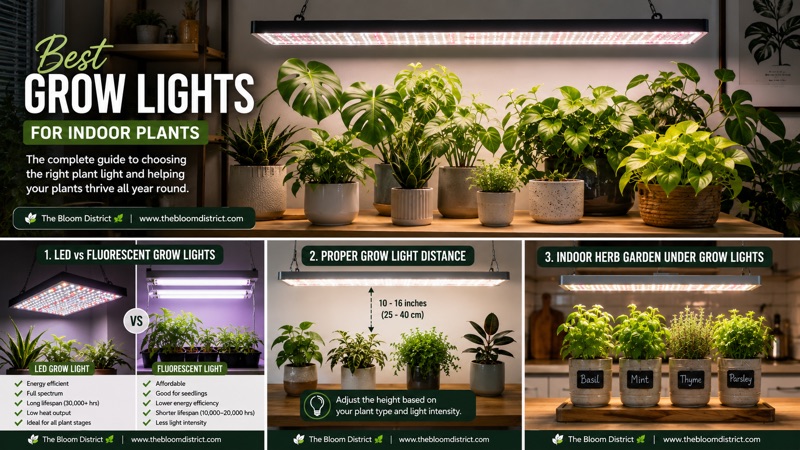
Have you ever placed a plant next to a window, only to watch it become leggy, pale, and weak?
Lack of sunlight is one of the biggest reasons indoor plants struggle. Fortunately, modern grow lights can provide the light plants need—even in apartments, offices, or homes with limited natural sunlight.
Whether you’re growing tropical houseplants, herbs, seedlings, or succulents, this guide will help you choose the perfect grow light for healthier, faster-growing plants.
📋 At a Glance
|
|
Recommendation |
|
Best overall |
Full-spectrum LED |
|
Most energy efficient |
LED Grow Lights |
|
Best for herbs |
Clip-on LED Light |
|
Best for seedlings |
LED Panel |
|
Best for shelves |
LED Grow Light Bars |
|
Lifespan |
30,000- 50,000 hours |
|
Daily usage |
12-16 hours |
📚 Table of Contents
- Why Indoor Plants Need Grow Lights
- What Is a Grow Light?
- Types of Grow Lights
- LED vs Fluorescent vs HID
- Full Spectrum Explained
- How to Choose the Best Grow Light
- Best Grow Lights by Plant Type
- Recommended Product Features
- Common Mistakes
- Frequently Asked Questions
- Quick Summary
☀️ Why Do Indoor Plants Need Grow Lights?
Plants convert light into energy through photosynthesis.
Without enough light, plants may:
- Grow slowly
- Produce smaller leaves
- Lose their vibrant color
- Stretch toward windows
- Drop leaves
- Stop flowering
- Become weak and unhealthy
Grow lights replace or supplement natural sunlight, allowing plants to thrive regardless of weather or season.
💡 What Is a Grow Light?
A grow light is an artificial light designed to provide wavelengths that support plant growth.
Unlike ordinary household bulbs, quality grow lights produce light that plants can efficiently use for:
- Leaf growth
- Root development
- Flowering
- Fruit production
- Seed germination
🌈 Understanding Full-Spectrum Light
Full-spectrum lights mimic natural daylight.
They include wavelengths that support every stage of plant growth.
Benefits include:
✅ Healthy foliage
✅ Strong stems
✅ Better flowering
✅ Improved photosynthesis
✅ Natural-looking plant colors
For most home gardeners, full-spectrum LED lights are the best all-around choice.
🔍 Types of Grow Lights
|
|
Best For |
Energy Efficiency |
Lifespan |
|
LED |
All indoor plants |
⭐️⭐️⭐️⭐️⭐️ |
50,000 hrs |
|
Fluorescent (T5) |
Seedlings & herbs |
⭐️⭐️⭐️ |
20,000 hrs |
|
HID |
Commercial growing |
⭐️ |
10,000 hrs |
|
Incandescent |
Not recommended |
Very Low |
Short |
🏆 Winner: Full-spectrum LED lights offer the best balance of efficiency, lifespan, and plant performance.
⚖️ LED vs Fluorescent vs HID
LED Grow Lights
Pros
- Extremely energy efficient
- Long lifespan
- Low heat output
- Full-spectrum options
- Ideal for home use
Cons
- Higher initial cost
Fluorescent Lights
Pros
- Affordable
- Good for seedlings
- Low heat
Cons
- Lower light intensity
- Shorter lifespan
HID Lights
Pros
- Very powerful
Cons
- High electricity usage
- Produce significant heat
- Require extra ventilation
For most indoor gardeners, HID lights are unnecessary.
🌱 Best Grow Lights by Plant Type
|
Plant |
Recommended Grow Light |
|
Pothos |
Full-spectrum LED Bar |
|
Snake Plant |
Small LED Panel |
|
Monstera |
Hanging LED Light |
|
Succulents |
High-intensity LED |
|
Herbs |
Clip-on LED |
|
Orchids |
Adjustable LED |
|
Seedlings |
T5 or LED Panel |
|
African Violet |
Full-spectrum LED |
🛒 Features to Look For
Before buying a grow light, consider these features:
- Full-spectrum output
- Adjustable brightness
- Built-in timer
- Energy-efficient LEDs
- Adjustable height
- Flexible gooseneck arms
- Low heat emission
- Long lifespan
- Good warranty
These features improve both plant health and ease of use.
📏 How Far Should Grow Lights Be?
|
Light Type |
Distance from Plant |
|
Low-power LED |
12-18 inches |
|
Medium LED |
10-16 inches |
|
High-power LED |
18-24 inches |
|
Fluorescent |
4-8 inches |
Adjust the height if you notice stretching or leaf bleaching.
⏰ How Long Should Grow Lights Stay On?
Different plants require different amounts of light.
|
Plant Type |
Daily Light |
|
Tropical houseplants |
12-14 hours |
|
Herbs |
14-16 hours |
|
Vegetables |
14-16 hours |
|
Succulents |
12-14 hours |
|
Seedlings |
16 hours |
Plants also need a dark period each day to rest.
🚨 Signs Your Grow Light Isn’t Working Well
Watch for these symptoms:
- Long, thin stems
- Pale leaves
- Slow growth
- Small new leaves
- Plants leaning toward windows
- Poor flowering
These often indicate insufficient light intensity or duration.
🌟 Common Mistakes
❌ Leaving lights on 24 hours a day
❌ Positioning lights too far away
❌ Buying ordinary household bulbs
❌ Ignoring timer settings
❌ Using weak lights for sun-loving plants
❌ Forgetting to clean dusty light fixtures
💡 Pro Gardener Tips
Use a timer to maintain a consistent light schedule. Plants thrive on routine, and automation ensures they receive the same amount of light every day.
Rotate your plants weekly if the light source comes from one direction. This encourages balanced, even growth.
Keep light fixtures clean. Dust on bulbs or LED panels can noticeably reduce light output over time.
❓ Frequently Asked Questions
Can grow lights completely replace sunlight?
Yes, high-quality full-spectrum grow lights can provide enough light for many indoor plants, especially when used for the appropriate number of hours each day.
Are LED grow lights safe?
Yes. They produce very little heat and are generally safe when used according to the manufacturer’s instructions.
Can I use a regular LED bulb?
Standard household LED bulbs provide illumination for people but usually lack the light intensity and spectrum needed for healthy plant growth.
Do grow lights increase electricity bills?
Modern LED grow lights are energy efficient and typically cost much less to operate than older fluorescent or HID systems.
Can too much grow light harm plants?
Yes. Excessive light can cause leaf bleaching, dry edges, or stress. Follow the recommended distance and daily lighting duration for your plant type.
🌼 Quick Summary
Indoor plants depend on adequate light to grow, and when natural sunlight isn’t enough, grow lights offer a practical solution. Full-spectrum LED grow lights are the best choice for most home gardeners because they are energy efficient, long-lasting, and suitable for a wide range of plants. By selecting the right light type, placing it at the proper distance, and using a consistent lighting schedule, you can enjoy healthier foliage, stronger growth, and more vibrant indoor plants throughout the year.
Related Articles
- Why Are My Plant Leaves Turning Brown? (Complete Guide)
- How to Increase Humidity for Indoor Plants
- How to Save an Overwatered Plant
Comments
Post a Comment