
🌿 No Backyard? No Problem.
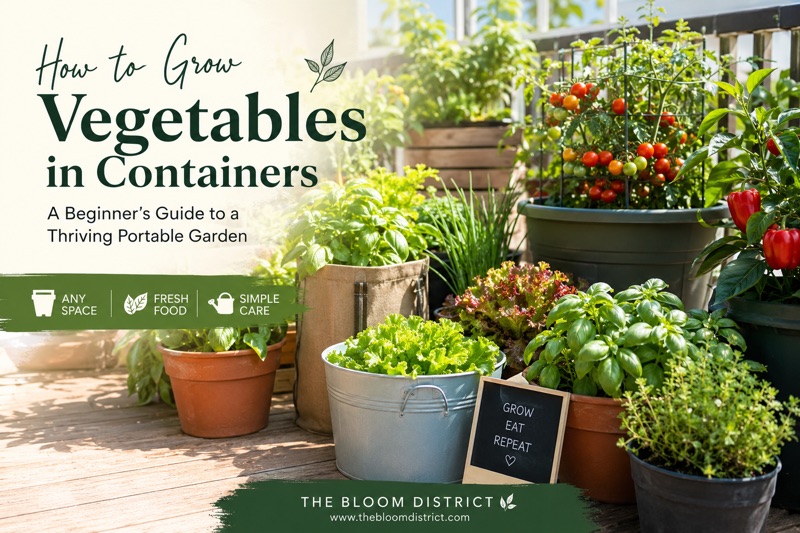
Imagine stepping onto your balcony in the morning and picking fresh cherry tomatoes for breakfast, crisp lettuce for lunch, and fragrant basil for dinner—all from a few containers.
Container gardening has transformed the way people grow food. Whether you have a tiny apartment balcony, a sunny patio, or just a windowsill, you can create a surprisingly productive vegetable garden.
Even better? Containers give you greater control over soil quality, watering, pests, and plant health than traditional gardens.
The best garden isn’t always the biggest one—it’s the one that grows where you live.
📌 Quick Overview
|
Feature |
Details |
|
Best For |
Balconies, patios, rooftops, small yards |
|
Skill Level |
Beginner |
|
Sunlight |
6-8 hours daily |
|
Watering |
Daily during hot weather |
|
Best Vegetables |
Tomatoes, peppers, lettuce, herbs, beans, cucumbers |
|
Harvest Time |
30-90+ days depending on crop |
🌱 Why Grow Vegetables in Containers?
Growing vegetables in pots isn’t simply a backup option—it offers advantages many gardeners actually prefer.
✅ Better Soil Control
Poor native soil doesn’t matter.
You choose exactly what your vegetables grow in.
✅ Fewer Weeds
Since containers use fresh potting mix, weeds are dramatically reduced.
Less weeding means more harvesting.
✅ Portable Garden
Need more sunlight?
Simply move the container.
Protecting plants from storms or heat waves becomes much easier.
✅ Reduced Disease Problems
Containers often experience fewer soil-borne diseases because they use clean growing media instead of garden soil.
🌿 Best Vegetables for Containers
Not every vegetable enjoys life in a pot, but many thrive in containers.
|
Vegetable |
Container Size |
Easy for Beginners? |
|
Cherry Tomatoes |
5 gallons |
⭐️⭐️⭐️⭐️⭐️ |
|
Lettuce |
8-10 inches |
⭐️⭐️⭐️⭐️⭐️ |
|
Spinach |
8 inches |
⭐️⭐️⭐️⭐️⭐️ |
|
Radishes |
6-8 inches |
⭐️⭐️⭐️⭐️⭐️ |
|
Peppers |
3-5 gallons |
⭐️⭐️⭐️⭐️ |
|
Bush Beans |
12 inches |
⭐️⭐️⭐️⭐️ |
|
Cucumbers (compact varieties) |
5 gallons + trellis |
⭐️⭐️⭐️⭐️ |
|
Kale |
10-12 inches |
⭐️⭐️⭐️⭐️⭐️ |
|
Carrots (short varieties) |
12 inches deep |
⭐️⭐️⭐️⭐️ |
|
Herbs |
6-8 inches |
⭐️⭐️⭐️⭐️⭐️ |
🪴 Choosing the Right Container
One of the biggest beginner mistakes is choosing containers that are too small.
Vegetables need room for roots.
Great Container Options
- Plastic pots
- Ceramic pots
- Fabric grow bags
- Wooden planters
- Metal containers (avoid overheating)
- Food-safe buckets
- Raised container boxes
📦 Container Size Guide
|
Plant |
Minimum Size |
|
Lettuce |
1–2 gallons |
|
Herbs |
1 gallon |
|
Pepper |
3 gallons |
|
Tomato |
5 gallons |
|
Cucumber |
5 gallons |
|
Eggplant |
5 gallons |
|
Zucchini |
10 gallons |
Rule of thumb: Bigger containers dry out more slowly and support healthier root systems.
🌞 Finding the Perfect Spot
Vegetables love sunshine.
Most crops require:
☀️ 6–8 hours of direct sunlight every day
Some leafy vegetables tolerate partial shade:
- Lettuce
- Spinach
- Kale
- Swiss chard
Fruiting vegetables need maximum sunlight:
- Tomatoes
- Peppers
- Cucumbers
- Eggplants
🪹 The Best Soil for Container Vegetables
Never fill containers with garden soil.
Garden soil becomes:
❌ Heavy
❌ Compacted
❌ Poorly drained
Instead, use:
✅ High-quality potting mix
A good mix contains:
- Peat moss or coco coir
- Compost
- Perlite
- Vermiculite
- Organic nutrients
🌿 DIY Potting Mix
Try this simple recipe:
- 40% compost
- 40% coco coir
- 20% perlite
The result is lightweight, fertile, and drains well.
💧 Watering Container Vegetables
Containers dry much faster than garden beds.
During summer, watering may be needed every day, and sometimes twice daily during extreme heat.
Signs Your Plants Need Water
🔹 Wilting leaves
🔹 Dry soil 1 inch below the surface
🔹 Lightweight containers
💡 Pro Watering Tips
✔ Water early in the morning.
✔ Water deeply until it drains from the bottom.
✔ Avoid shallow watering.
✔ Mulch the soil surface to retain moisture.
🌿 Fertilizing for Bigger Harvests
Container vegetables quickly use available nutrients.
Feed plants regularly.
Organic Options
- Compost
- Worm castings
- Fish emulsion
- Seaweed fertilizer
Synthetic Options
Balanced fertilizers like:
10-10-10
or
20-20-20
Follow label directions carefully to avoid overfeeding.
🌼 Supporting Climbing Vegetables
Some vegetables grow upward rather than outward.
Use:
- Bamboo stakes
- Tomato cages
- Trellises
- Garden netting
Perfect for:
- Tomatoes
- Cucumbers
- Pole beans
- Peas
Growing vertically also saves valuable space.
🐞 Common Problems and Easy Fixes
|
Problem |
Cause |
Solution |
|
Yellow leaves |
Overwatering |
Reduce watering |
|
Wilting |
Dry soil |
Water deeply |
|
Blossom drop |
Heat stress |
Provide afternoon shade |
|
Small fruits |
Poor pollination |
Hand-pollinate flowers |
|
Slow growth |
Lack of nutrients |
Feed every 2-3 weeks |
|
Root rot |
Poor drainage |
Improve drainage holes |
🌡️ Protecting Containers During Summer
Containers heat up quickly.
Help your plants stay healthy by:
- Using light-colored pots
- Adding mulch
- Watering in the morning
- Moving containers during extreme afternoon heat
- Grouping pots together to reduce moisture loss
🥬 Companion Planting in Containers
Some vegetables grow better together.
Great Pairings
|
Plant |
Companion |
|
Tomatoes |
Basil |
|
Lettuce |
Radishes |
|
Peppers |
Basil |
|
Cucumbers |
Dill |
|
Beans |
Marigolds |
These combinations may help improve growth, attract pollinators, and discourage some pests.
📅 Seasonal Planting Guide
🌸 Spring
- Lettuce
- Spinach
- Peas
- Radishes
☀️ Summer
- Tomatoes
- Cucumbers
- Peppers
- Beans
🍂 Autumn
- Kale
- Carrots
- Swiss chard
- Broccoli
🌾 Harvest Often
Regular harvesting encourages many vegetables to keep producing.
Examples include:
- Beans
- Cucumbers
- Zucchini
- Herbs
- Lettuce (pick outer leaves first)
The more frequently you harvest, the longer many plants remain productive.
🌟 Beginner Success Checklist
✅ Choose containers with drainage holes
✅ Use quality potting mix
✅ Give plants 6–8 hours of sunlight
✅ Water consistently
✅ Fertilize every 2–3 weeks
✅ Support climbing vegetables
✅ Harvest regularly
🌼 Frequently Asked Questions
Can I grow vegetables on a balcony?
Absolutely. As long as the area receives enough sunlight, balconies can produce excellent harvests in containers.
What is the easiest vegetable to grow in a pot?
Lettuce, radishes, herbs, bush beans, and cherry tomatoes are among the easiest choices for beginners.
How often should I water container vegetables?
Check the soil daily. Water when the top inch feels dry. In hot weather, containers may need watering once or even twice a day.
Can I reuse potting soil next year?
Yes, but refresh it by removing old roots and mixing in fresh compost and new potting mix. Avoid reusing soil from plants that suffered from serious diseases.
🌿 Final Thoughts
Container gardening proves that you don’t need acres of land to grow delicious, homegrown vegetables. With the right containers, quality potting mix, regular watering, and a sunny location, even the smallest balcony can become a productive edible garden.
Start with a few beginner-friendly crops like lettuce, herbs, or cherry tomatoes, learn from each season, and expand as your confidence grows. Before long, you’ll enjoy the satisfaction of harvesting fresh produce just steps from your kitchen.
Every thriving vegetable garden begins with a single container—and the decision to plant something today.
Related Articles
- How to Start a Garden from Scratch
- Small Garden Design Ideas
- How to Grow Vegetables in Containers
- Spring Gardening Checklist
- Summer Garden Maintenance Tips
- How to Build Healthy Garden Soil
Comments
Post a Comment