
🌱 The Secret Beneath Every Thriving Garden
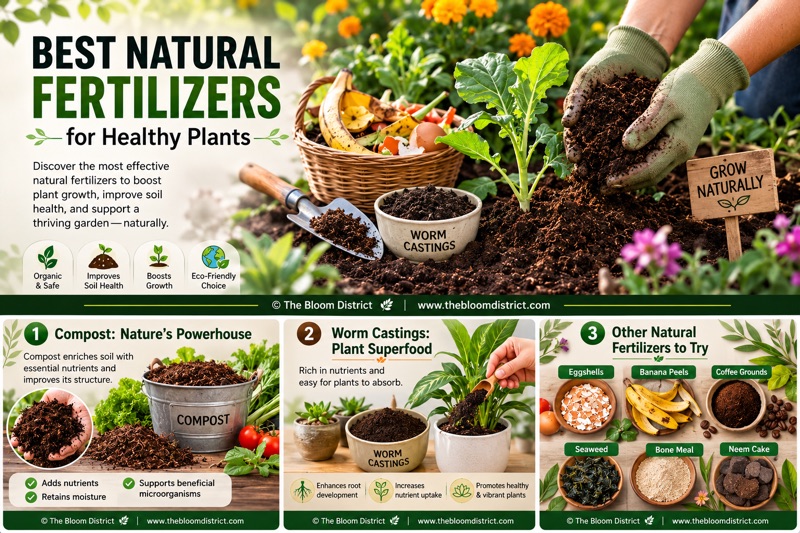
Walk through any beautiful garden and you will notice the flowers, the colors, and the healthy green leaves. But the real magic is happening beneath the surface.
Hidden underground, millions of tiny organisms are working together with plant roots, transforming organic matter into the nutrients plants need to grow stronger.
A gardener may think the secret is the perfect seed, the right amount of sunlight, or frequent watering. But experienced gardeners know something deeper:
Healthy plants begin with healthy soil.
For generations, gardeners have used natural fertilizers to restore soil, encourage stronger roots, and create gardens that continue to thrive year after year.
Unlike synthetic fertilizers that can provide a quick nutrient boost but may harm soil balance when overused, natural fertilizers work with nature. They slowly release nutrients, improve soil structure, and create a healthier environment for plants.
Whether you are growing vegetables in your backyard, caring for indoor plants, or creating a flower garden, choosing the right natural fertilizer can completely transform your plants.
🌿 Quick Answer: What Are the Best Natural Fertilizers for Plants?
The best natural fertilizers include:
- Compost — best all-purpose soil builder
- Worm Castings — best for indoor plants and seedlings
- Fish Emulsion — best for leafy growth
- Bone Meal — best for roots and flowers
- Aged Manure — best for garden beds
- Seaweed Fertilizer — best for plant strength and stress resistance
- Banana Peel Fertilizer — best potassium source
- Eggshells — best calcium supplement
🪴 Why Natural Fertilizers Are Better for Your Garden
Plants do not only need nutrients — they need a healthy ecosystem.
Natural fertilizers improve the soil by:
|
Benefit |
How It Helps Plants |
|
Improves soil structure |
Allows roots to grow deeper |
|
Increases beneficial microbes |
Helps plants absorb nutrients |
|
Improves moisture retention |
Reduces watering stress |
|
Releases nutrients slowly |
Prevents nutrient overload |
|
Builds long-term fertility |
Creates healthier soil every season |
A garden fed with natural fertilizers becomes stronger over time because the soil itself becomes more alive.
🌱 Understanding Plant Nutrition: What Are Plants Really Eating?
Before choosing a fertilizer, it helps to understand the three main nutrients plants need.
|
Nutrient |
Main Function |
Signs of Deficiency |
|
Nitrogen (N) |
Leaf and stem growth |
Yellow leaves, slow growth |
|
Phosphorus (P) |
Roots and flowers |
Weak roots, poor blooming |
|
Potassium (K) |
Overall strength and fruit production |
Weak stems, low fruit quality |
Different plants need different nutrient combinations.
For example:
🌿 Lettuce needs more nitrogen for leafy growth.
🌹 Roses benefit from phosphorus for flowers.
🍅 Tomatoes need balanced nutrition for roots, flowers, and fruit.
This is why choosing the right natural fertilizer matters.
📌 Natural Fertilizer vs Chemical Fertilizer
|
Feature |
Natural Fertilizers |
Chemical Fertilizers |
|
Nutrient Release |
Slow and steady |
Fast |
|
Soil Improvement |
Excellent |
Limited |
|
Risk of Root Burn |
Low |
Higher |
|
Microbial Activity |
Increases |
May decrease |
|
Long-Term Benefits |
High |
Depends on use |
|
Environmental Impact |
More sustainable |
Can cause runoff |
The best gardeners do not simply feed plants — they feed the soil.
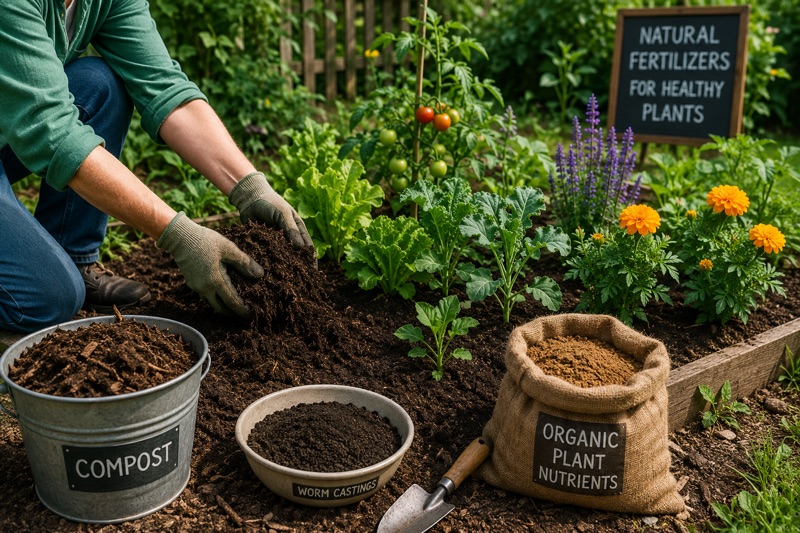
🌿 1. Compost: The Foundation of Every Healthy Garden
If natural fertilizers had a king, compost would be the first choice.
Often called “black gold” by gardeners, compost is created when organic materials such as leaves, grass clippings, vegetable scraps, and plant debris break down into rich, dark soil-like material.
It does not simply feed plants — it improves the entire growing environment.
Why Compost Works So Well
Compost:
✅ Adds essential nutrients
✅ Improves drainage in heavy soils
✅ Helps sandy soils hold moisture
✅ Encourages beneficial microorganisms
✅ Supports stronger root systems
Best Plants for Compost
|
Plant Type |
Benefit |
|
Vegetables |
Better growth and production |
|
Flowers |
More blooms |
|
Fruit trees |
Stronger roots |
|
Herbs |
Healthy continuous growth |
|
Houseplants |
Improved potting soil |
How to Use Compost Correctly
For garden beds:
- Spread 2–3 inches of compost over the soil.
- Mix gently into the top layer.
- Water after application.
For potted plants:
Mix compost with potting soil rather than using pure compost.
🌿 Gardener’s Tip:
The best time to add compost is before planting and during seasonal garden preparation.
🪱 2. Worm Castings: The Natural Plant Booster Every Gardener Should Know
Among organic gardeners, worm castings are often described as “nature’s perfect fertilizer.”
These small, dark particles are created when earthworms digest organic matter and transform it into a nutrient-rich material full of beneficial microorganisms.
Unlike strong fertilizers that push rapid growth, worm castings gently improve the soil and help plants develop naturally.
🌿 Why Worm Castings Are So Effective
Worm castings provide:
✅ Slow-release nutrients
✅ Beneficial bacteria and fungi
✅ Improved soil structure
✅ Better water retention
✅ Stronger root development
They are especially valuable for young plants because they are gentle and unlikely to damage roots.
Best Plants for Worm Castings
|
Plant |
Why It Benefits |
|
Houseplants |
Improves potting soil quality |
|
Seedlings |
Supports healthy early growth |
|
Herbs |
Encourages continuous growth |
|
Vegetables |
Improves root development |
|
Flowers |
Supports stronger blooms |
How to Use Worm Castings
For Indoor Plants:
Mix:
- 20–30% worm castings with potting soil
or
- Add a thin layer on top of the soil every few months.
For Garden Beds:
Spread a layer around plants and gently mix into the soil.
🌱 Bloom District Tip:
Worm castings are one of the safest fertilizers for beginners because they nourish plants without the risk of fertilizer burn.
🐟 3. Fish Emulsion: The Fast Natural Solution for Leafy Growth
When plants look pale, weak, or slow-growing, they may need more nitrogen.
Fish emulsion is a natural fertilizer made from processed fish materials and is especially effective for encouraging green, healthy foliage.
What Does Fish Emulsion Do?
Fish emulsion helps plants:
🌿 Produce greener leaves
🌿 Grow stronger stems
🌿 Recover after stress
🌿 Develop healthy new growth
Best Plants for Fish Emulsion
|
Plants |
Benefit |
|
Lettuce |
Faster leaf production |
|
Spinach |
Rich green growth |
|
Kale |
Strong foliage |
|
Herbs |
More harvests |
|
Lawn grass |
Improved color |
How to Apply Fish Emulsion
Most fish emulsion products are diluted with water before use.
Apply:
- During the growing season
- Every few weeks depending on plant needs
⚠ Avoid excessive use.
Too much nitrogen can create beautiful leaves but fewer flowers and fruits.
🌸 4. Bone Meal: The Root and Flower Specialist
If compost is the foundation of the garden, bone meal is the specialist that supports flowering and root development.
Made from finely ground animal bones, bone meal is naturally rich in phosphorus and calcium.
Why Plants Need Bone Meal
Phosphorus supports:
🌱 Strong root systems
🌺 Flower formation
🍅 Fruit development
🌷 Bulb growth
Best Plants for Bone Meal
|
Plant |
Benefit |
|
Roses |
More flowers |
|
Tulips |
Strong bulbs |
|
Tomatoes |
Better root growth |
|
Peppers |
Improved fruit production |
|
Fruit trees |
Healthier development |
How to Use Bone Meal
Add it:
- Before planting bulbs
- When transplanting flowering plants
- Around established plants according to package directions
🌿 Important:
Bone meal works best when soil conditions allow plants to absorb phosphorus. Extremely alkaline soils may reduce its effectiveness.
🐄 5. Aged Manure: An Ancient Fertilizer That Still Works
For centuries, farmers have relied on animal manure to restore soil fertility.
Today, properly composted manure remains one of the best natural fertilizers for large gardens.
Types of Manure
|
Type |
Characteristics |
|
Cow Manure |
Balanced and gentle |
|
Horse Manure |
Improves soil texture |
|
Chicken Manure |
High in nutrients |
|
Sheep Manure |
Rich organic matter |
Benefits of Aged Manure
It helps:
✅ Improve poor soil
✅ Increase organic matter
✅ Support microorganisms
✅ Improve moisture retention
⚠ Common Mistake: Using Fresh Manure
Fresh manure can:
❌ Burn plant roots
❌ Contain weed seeds
❌ Harm young plants
Always use well-aged or composted manure.
🌊 6. Seaweed Fertilizer: The Ocean’s Gift to Your Garden
Seaweed fertilizer does not replace traditional fertilizers, but it provides something special:
A wide range of trace minerals and natural compounds that support plant strength.
Benefits of Seaweed Fertilizer
Seaweed can help plants:
🌱 Develop stronger roots
☀ Handle heat stress
💧 Tolerate drought conditions
🐛 Become more resistant to environmental stress
Best Uses
Especially useful for:
- Plants recovering after transplanting
- Plants growing in stressful climates
- Vegetables during active growth
🍌 7. Banana Peel Fertilizer: A Simple Potassium Boost
Banana peels are popular among home gardeners because they contain potassium, an important nutrient for flowering and fruit production.
Potassium Helps Plants:
🍅 Produce better fruits
🌹 Improve flowering
🌿 Strengthen stems
☀ Handle dry conditions
Simple Homemade Banana Peel Fertilizer
- Cut banana peels into small pieces.
- Place them in water for 24–48 hours.
- Use the infused water around plants.
⚠ Reality Check:
Banana peels are helpful, but they should not replace a complete fertilizer program because they do not provide all nutrients plants need.
🥚 8. Eggshells: Natural Calcium Support
Eggshells are a useful addition to the garden, especially for plants that benefit from calcium.
Calcium Helps Prevent:
- Weak plant structure
- Calcium-related fruit problems
- Poor root development
Best Plants for Eggshells
🍅 Tomatoes
🌶 Peppers
🥒 Squash
🌱 Vegetables
How to Prepare Eggshells
- Wash shells.
- Dry completely.
- Crush into a fine powder.
- Mix into soil.
Large pieces break down very slowly, so finer powder works better.
🌿 Choosing the Right Natural Fertilizer for Your Plants
Not every plant needs the same type of nutrition.
A common mistake among beginners is using one fertilizer for everything. While compost is an excellent foundation, some plants need additional nutrients depending on their growth stage.
The best approach is to understand what your plant needs and choose the fertilizer that supports its natural growth.
📊 Best Natural Fertilizers by Plant Type
|
Plant Type |
Recommended Natural Fertilizer |
Why It Helps |
|
Tomatoes 🍅 |
Compost + Bone Meal + Eggshells |
Supports roots, flowers, and fruit |
|
Roses 🌹 |
Compost + Bone Meal + Alfalfa Meal |
Encourages strong blooms |
|
Leafy Vegetables 🥬 |
Compost + Fish Emulsion |
Promotes healthy green leaves |
|
Herbs 🌿 |
Compost + Worm Castings |
Supports continuous growth |
|
Indoor Plants 🪴 |
Worm Castings + Compost Tea |
Gentle nutrition |
|
Fruit Trees 🌳 |
Compost + Aged Manure |
Builds long-term soil health |
|
Flowering Plants 🌸 |
Bone Meal + Compost |
Improves flowering |
|
Seedlings 🌱 |
Worm Castings |
Gentle root development |
🏡 Homemade Natural Fertilizer Recipes
One of the best things about natural gardening is that many useful fertilizers can be created at home.
🍌 Banana Peel Tea
Best for: Flowering plants and fruiting vegetables
Ingredients:
- 2–3 banana peels
- 1 liter of water
Method:
- Cut banana peels into small pieces.
- Soak them in water for 24–48 hours.
- Strain the water.
- Apply around plants.
☕ Compost Tea
Best for: Almost all plants
Compost tea creates a nutrient-rich liquid that delivers beneficial microorganisms directly to the soil.
Method:
- Add mature compost to a container of water.
- Let it sit while stirring occasionally.
- Use the liquid to water plants.
🥚 Eggshell Calcium Powder
Best for: Tomatoes and peppers
Method:
- Clean eggshells.
- Dry them completely.
- Grind into powder.
- Mix into soil.
⚠️ Common Natural Fertilizer Mistakes
Natural does not always mean “use as much as possible.”
Even organic fertilizers can cause problems when misused.
❌ Mistake 1: Adding Too Much Fertilizer
More fertilizer does not mean faster growth.
Excess nutrients can:
- Damage roots
- Create nutrient imbalance
- Reduce flowering
- Attract pests
Solution:
Apply small amounts consistently rather than large amounts occasionally.
❌ Mistake 2: Using Fresh Manure
Fresh manure can be too strong for plants.
It may contain:
- Excess nitrogen
- Weed seeds
- Harmful pathogens
Solution:
Use only aged or composted manure.
❌ Mistake 3: Fertilizing Dry Soil
Adding fertilizer to dry soil can stress plant roots.
Solution:
Water the soil first, then apply fertilizer.
❌ Mistake 4: Ignoring Soil Problems
Sometimes plants are not unhealthy because they lack fertilizer.
The real problem may be:
- Poor drainage
- Incorrect watering
- Root damage
- Wrong soil pH
Solution:
Always diagnose the problem before adding nutrients.
🌱 How Often Should You Use Natural Fertilizers?
The schedule depends on the fertilizer and plant type.
|
Fertilizer |
Suggested Frequency |
|
Compost |
1-2 times per year |
|
Worm Castings |
Every 2-3 months |
|
Fish Emulsion |
Every 2-4 weeks during growth |
|
Seaweed Fertilizer |
Every few weeks |
|
Bone Meal |
During planting or seasonal feeding |
|
Manure |
Before planting seasons |
🌿 Pro Tips for Better Results
1. Feed the Soil, Not Just the Plant
Healthy soil creates healthy plants.
Adding organic matter regularly is one of the best gardening habits.
2. Combine Different Natural Fertilizers
A strong organic garden usually uses a combination:
🌿 Compost → overall soil health
🪱 Worm Castings → microorganisms
🌸 Bone Meal → flowers and roots
🐟 Fish Emulsion → leafy growth
3. Observe Your Plants
Plants communicate through their appearance.
Look for:
- Leaf color changes
- Slow growth
- Weak stems
- Poor flowering
These signs help you understand what your plants need.
❓ Frequently Asked Questions
What is the best natural fertilizer for all plants?
Compost is the best general-purpose natural fertilizer because it improves soil structure and provides a balanced supply of nutrients.
Can homemade fertilizers replace commercial fertilizers?
Homemade fertilizers can be very effective, especially when combined with compost and good soil management. However, some plants may still benefit from specialized organic fertilizers.
Are natural fertilizers safe for vegetables?
Yes. Properly prepared compost, worm castings, and organic fertilizers are widely used for vegetable gardens.
How long does natural fertilizer take to work?
Natural fertilizers usually work more slowly than synthetic fertilizers because they release nutrients gradually while improving soil health.
Can I use natural fertilizers for indoor plants?
Yes. Worm castings, compost tea, and diluted organic fertilizers are excellent choices for houseplants.
🌿 Final Thoughts
A thriving garden does not begin with expensive products — it begins with healthy soil.
Natural fertilizers work together with nature, supporting the invisible world beneath the surface that allows plants to grow stronger, healthier, and more resilient.
Whether you choose compost, worm castings, fish emulsion, bone meal, or homemade solutions, the most important step is consistency.
Feed your soil, understand your plants, and your garden will reward you with beautiful growth season after season.
Related Articles
Comments
Post a Comment