
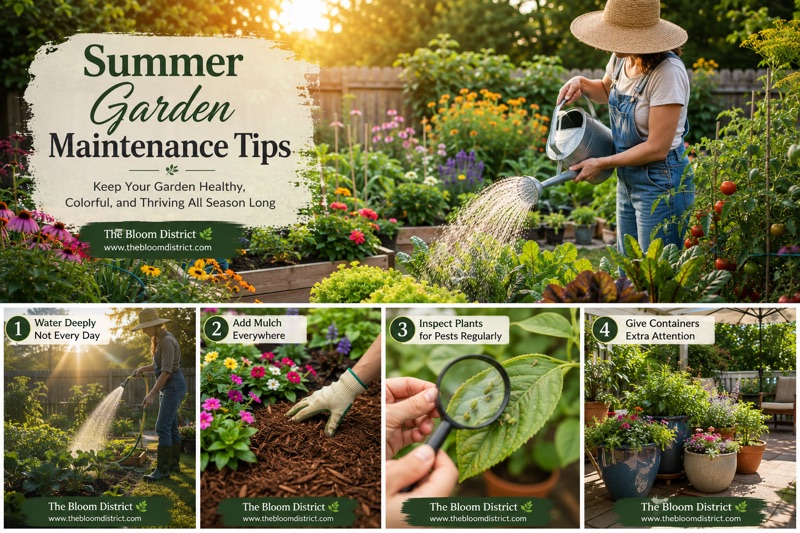
🌞 Summer Is Beautiful… But Tough on Your Garden
There’s something magical about stepping into a garden on a warm summer morning.
Flowers are bursting with color, vegetables are growing rapidly, butterflies drift from bloom to bloom, and everything seems alive.
But beneath all that beauty, summer is also one of the most stressful seasons for plants.
Hot afternoons, drying winds, intense sunlight, thirsty soil, aggressive weeds, and hungry pests can quickly turn a thriving garden into a struggling one.
The good news?
A healthy summer garden doesn’t require spending hours outside every day.
With a few smart maintenance habits, you can reduce plant stress, save water, encourage continuous blooms, and enjoy a lush landscape throughout the hottest months.
In this complete guide, you’ll learn the best summer garden maintenance tips used by experienced gardeners to keep plants healthy—even during heat waves.
🌿 Quick Summer Garden Care Checklist
|
Task |
How Often |
Why It Matters |
|
Deep Watering |
2-3 times weekly |
Encourages deeper roots |
|
Mulching |
Once each season |
Keeps soil cool and moist |
|
Deadheading Flowers |
Weekly |
Produces more blooms |
|
Weed Removal |
Weekly |
Prevents competition for water |
|
Pest Inspection |
Every 3-4 days |
Stops infestations early |
|
Fertilizing |
Every 3-6 weeks |
Supports healthy growth |
|
Lawn Mowing |
Weekly |
Prevents heat stress |
|
Harvest Vegetables |
Frequently |
Encourages continuous production |
☀️ 1. Water Deeply—Not Every Day
One of the biggest mistakes gardeners make during summer is watering lightly every evening.
Shallow watering only wets the soil surface, encouraging roots to stay near the top where temperatures are highest.
Instead:
✅ Water deeply.
✅ Water less often.
Deep watering encourages plants to develop stronger root systems capable of surviving hot weather.
Best Time to Water
- Early morning (best)
- Before 9 AM
- Avoid midday watering
- Water in the evening only if necessary
|
Plant Type |
Frequency |
|
Vegetables |
Every 2-3 days |
|
Flower Beds |
2-3 times weekly |
|
Trees |
Every 7-10 days |
|
Shrubs |
Weekly |
|
Containers |
Daily during heat waves |
🌾 2. Add Mulch Everywhere
Mulch is one of the easiest ways to protect plants from summer heat.
A 2–3 inch layer of mulch can:
✔ Reduce evaporation
✔ Keep soil cooler
✔ Suppress weeds
✔ Improve soil quality
✔ Prevent soil crusting
Popular mulch materials include:
- Bark chips
- Straw
- Compost
- Pine needles
- Shredded leaves
🌱 Bloom Tip
Never pile mulch directly against stems or tree trunks. Leave a small gap to prevent rot.
🌸 3. Remove Spent Flowers (Deadheading)
Deadheading tells flowering plants to produce more blooms instead of creating seeds.
Great plants for deadheading include:
- Petunias
- Roses
- Marigolds
- Coneflowers
- Zinnias
- Geraniums
Weekly deadheading often results in flowers lasting several weeks longer.
🌱 4. Feed Plants Carefully
Summer growth requires nutrients—but too much fertilizer during extreme heat can stress plants.
Use:
- Slow-release fertilizer
- Compost tea
- Liquid seaweed
- Balanced organic fertilizer
Avoid fertilizing:
❌ During heat waves
❌ Dry soil
Always water first.
🐛 5. Watch for Summer Pests
Hot weather encourages rapid pest reproduction.
Common summer pests include:
|
Pest |
Signs |
|
Aphids |
Curled leaves |
|
Spider Mites |
Fine webbing |
|
Whiteflies |
Tiny white insects |
|
Japanese Beetles |
Skeletonized leaves |
|
Slugs |
Holes in leaves |
Inspect plants every few days.
Early detection prevents major damage.
🌾 6. Remove Weeds Before They Spread
Weeds steal:
- Water
- Nutrients
- Sunlight
Pull weeds after watering or rainfall when the soil is soft.
Mulching greatly reduces weed growth.
✂️ 7. Prune Carefully
Avoid heavy pruning during extreme heat.
Instead:
✔ Remove dead branches
✔ Trim diseased foliage
✔ Improve airflow
Avoid removing more than one-third of a plant at once.
🥬 8. Harvest Vegetables Often
Many vegetables produce more when harvested regularly.
Harvest frequently:
- Cucumbers
- Zucchini
- Beans
- Tomatoes
- Peppers
Leaving mature vegetables on the plant often slows further production.
🌡️ 9. Protect Plants During Heat Waves
Extreme temperatures can cause:
- Leaf scorch
- Wilting
- Blossom drop
- Sunburn
Protection ideas:
- Shade cloth
- Temporary umbrellas
- Extra mulch
- Morning watering
- Avoid pruning
☀️ Heat Alert
If temperatures exceed 95°F (35°C) for several days, even drought-tolerant plants may require supplemental watering.
🪴 10. Give Container Plants Extra Attention
Containers heat up much faster than garden soil.
During very hot weather:
- Check moisture twice daily
- Water thoroughly
- Move pots into afternoon shade if possible
- Feed every two weeks
🌻 Summer Garden Maintenance Calendar
|
Week |
Main Tasks |
|
Week 1 |
Mulch, fertilize, inspect pests |
|
Week 2 |
Deadhead, weed, harvest |
|
Week 3 |
Water deeply, trim damaged growth |
|
Week 4 |
Inspect soil, refresh mulch, harvest |
🌼 Signs Your Garden Is Happy
Healthy summer plants usually have:
✅ Bright green leaves
✅ Continuous flowering
✅ Firm stems
✅ Moist soil
✅ Active pollinators
🚫 Common Summer Gardening Mistakes
|
Mistake |
Better Approach |
|
Watering every evening |
Water deeply in the morning |
|
Over-fertilizing |
Feed moderately |
|
Ignoring mulch |
Maintain a 2–3 inch layer |
|
Waiting to remove weeds |
Weed weekly |
|
Pruning heavily |
Prune lightly |
🌸 Final Thoughts
Summer doesn’t have to be a battle between you and the weather.
By focusing on deep watering, mulching, regular inspections, light feeding, and timely harvesting, you can create a garden that not only survives the hottest months—but truly flourishes.
Remember, successful summer gardening is about consistency rather than perfection. A few minutes of care each week can reward you with vibrant flowers, healthy vegetables, and a landscape that stays beautiful all season long.
❓Frequently Asked Questions
How often should I water my garden in summer?
Most garden beds benefit from deep watering two or three times a week, while containers may need daily watering during hot weather.
Should I fertilize plants during a heat wave?
No. Wait until temperatures cool to avoid stressing plants.
What is the best mulch for summer?
Organic mulches such as bark, straw, shredded leaves, and compost help retain moisture and improve soil health.
Why are my plants wilting even after watering?
Temporary afternoon wilting can be normal in hot weather. If plants remain wilted into the evening or the next morning, they may need additional water or have root issues.
How can I reduce weeds naturally?
Apply a 2–3 inch layer of mulch and remove weeds while they are still young before they produce seeds.
Related Articles
Comments
Post a Comment