
Why Are My Plant Leaves Turning Brown?
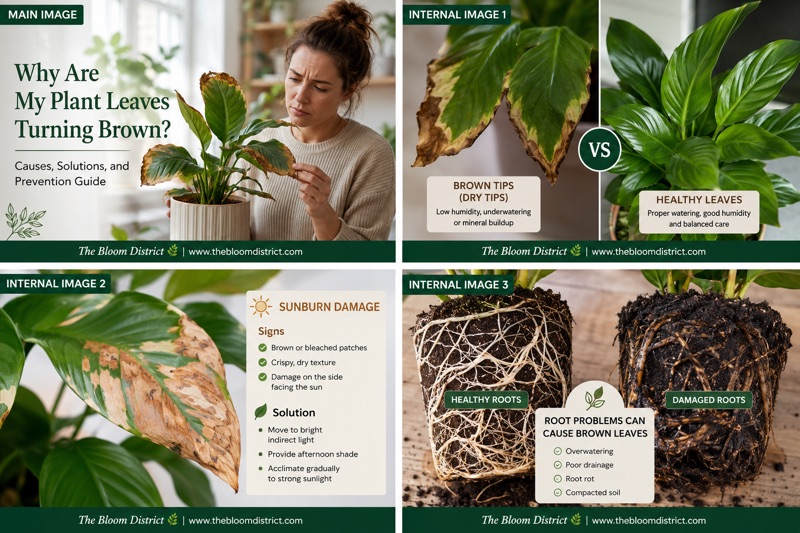
Causes, Solutions, and Prevention Guide
🌿 A Healthy Green Plant Can Change Overnight…
One day, your favorite plant looks lush and vibrant. The next, you notice crispy brown tips, dry edges, or large brown patches spreading across the leaves. It can be frustrating—especially if you’ve been watering and caring for your plant regularly.
The good news?
Brown leaves are usually your plant’s way of communicating that something isn’t right. In most cases, the problem can be identified and corrected before the entire plant suffers.
Whether you’re growing houseplants, vegetables, herbs, flowering plants, or ornamental shrubs, this guide will help you identify exactly why your plant’s leaves are turning brown—and what you can do to restore healthy growth.
📌 Quick Answer
Plant leaves usually turn brown because of watering problems, low humidity, excessive sunlight, fertilizer burn, temperature stress, pests, diseases, or natural aging. Identifying where the browning starts—tips, edges, or the entire leaf—is the fastest way to determine the cause and choose the right solution.
🌱 Brown Leaves at a Glance
|
Symptom |
Most Likely Cause |
Difficulty to Fix |
|
Brown tips |
Low humidity or inconsistent watering |
⭐️ Easy |
|
Brown crispy edges |
Underwatering or heat stress |
⭐️ Easy |
|
Brown spots |
Fungal disease or pests |
⭐️⭐️ Moderate |
|
Entire leaf brown |
Severe drought or root damage |
⭐️⭐️⭐️ Moderate |
|
Brown after fertilizing |
Fertilizer burn |
⭐️ Easy |
|
Brown after moving plant |
Environmental shock |
⭐️ Easy |
🌿 How to Diagnose Brown Leaves
Before treating your plant, answer these questions:
✅ Are only the leaf tips brown?
✅ Are the edges crispy?
✅ Is the soil completely dry?
✅ Is the soil constantly wet?
✅ Did you recently fertilize?
✅ Has the plant been moved?
✅ Is the plant sitting in direct afternoon sunlight?
✅ Can you see insects under the leaves?
Your answers will quickly narrow down the possible causes.
1. Underwatering
One of the most common reasons leaves turn brown is simply not receiving enough water.
When soil becomes too dry, the plant cannot move enough moisture to its leaves. To conserve water, it sacrifices the leaf tips first.
Signs
- Dry soil
- Crispy brown edges
- Curling leaves
- Wilting
- Slow growth
Solution
- Water deeply until excess water drains out.
- Water consistently rather than waiting until the soil becomes bone dry.
- Use mulch outdoors to retain moisture.
💡 Pro Tip: Water in the morning whenever possible to reduce stress.
2. Overwatering and Root Problems
Many gardeners assume brown leaves mean the plant needs more water—but too much water can cause the same symptom.
Constantly wet soil deprives roots of oxygen, causing root damage that prevents water absorption.
Signs
- Wet soil
- Soft brown leaves
- Yellow leaves before browning
- Mushy stems
- Bad smell from the pot
Solution
- Let the soil partially dry before watering again.
- Improve drainage.
- Repot if root rot is present.
- Trim damaged roots.
🌿 Quick Tip Box
Never water on a schedule alone.
Always check soil moisture first using your finger or a moisture meter.
3. Low Humidity
Many tropical houseplants evolved in humid rainforests.
Indoor heating and air conditioning often reduce humidity below what these plants need.
Plants That Commonly Suffer
- Calathea
- Prayer Plant
- Peace Lily
- Ferns
- Alocasia
Signs
- Brown tips only
- Healthy roots
- Healthy soil
- New leaves still forming
Solutions
- Increase room humidity.
- Use a pebble tray.
- Group plants together.
- Run a humidifier.
4. Too Much Sunlight
Sunburn isn’t limited to people.
Plants exposed to intense afternoon sunlight can develop dry brown patches.
Symptoms
- Brown patches
- Bleached leaves
- Crispy texture
- Damage only on the sunny side
Solution
Move the plant to bright indirect light or provide afternoon shade outdoors.
5. Fertilizer Burn
More fertilizer doesn’t always mean faster growth.
Excess fertilizer causes salt buildup around roots, drawing moisture away from the plant.
Signs
- Brown tips
- White crust on soil
- Fast browning after feeding
Solution
- Flush the soil with clean water.
- Reduce fertilizer frequency.
- Follow label instructions carefully.
6. Tap Water Minerals
Some plants are sensitive to minerals, chlorine, and fluoride commonly found in tap water.
Sensitive Plants
- Spider Plant
- Dracaena
- Peace Lily
Solution
Use:
- Rainwater
- Distilled water
- Filtered water
7. Temperature Stress
Sudden temperature changes can damage leaf tissue.
Common Causes
- Air conditioners
- Heating vents
- Frost
- Hot windows
- Cold drafts
Solution
Maintain stable temperatures and avoid placing plants near heating or cooling vents.
8. Pest Damage
Tiny insects feed on plant tissue, leaving brown spots and damaged leaves.
Common pests include:
- Spider mites
- Thrips
- Aphids
- Scale insects
Signs
- Tiny insects
- Webbing
- Speckled leaves
- Brown patches
Solution
- Isolate the plant.
- Wash leaves.
- Treat with insecticidal soap or neem oil.
- Repeat treatments weekly until pests are gone.
9. Plant Diseases
Fungal and bacterial diseases often create irregular brown spots.
Symptoms
- Dark lesions
- Yellow halos
- Spots spreading over time
Prevention
- Avoid wetting leaves.
- Improve air circulation.
- Remove infected foliage.
- Sterilize pruning tools.
10. Natural Aging
Not every brown leaf is a problem.
Older leaves naturally die as the plant focuses energy on new growth.
Signs
- Only the oldest leaves affected
- Healthy new growth
- No spreading symptoms
Simply remove old leaves using clean pruning shears.
🌿 Brown Leaf Symptoms Comparison
|
Symptom |
Likely Cause |
Best Solution |
|
Brown tips |
Low humidity |
Increase humidity |
|
Crispy edges |
Underwatering |
Water consistently |
|
Brown spots |
Disease |
Remove infected leaves |
|
Burned patches |
Too much sun |
Move to indirect light |
|
Entire leaf brown |
Root problems |
Check drainage |
|
Brown after feeding |
Fertilizer burn |
Flush soil |
🚫 Common Mistakes
❌ Watering every day without checking the soil
❌ Ignoring drainage holes
❌ Fertilizing stressed plants
❌ Leaving plants in harsh afternoon sun
❌ Using dull pruning tools
❌ Assuming every brown leaf means underwatering
✅ Prevention Checklist
✔ Check soil moisture before watering.
✔ Use pots with drainage holes.
✔ Increase humidity for tropical plants.
✔ Fertilize only during active growth.
✔ Inspect leaves weekly for pests.
✔ Rotate indoor plants for even light.
✔ Clean leaves regularly.
✔ Remove dead foliage promptly.
🌟 Expert Tips
Healthy roots produce healthy leaves. Most brown leaf problems begin below the soil surface, so always inspect the root system if symptoms continue despite proper care.
Frequently Asked Questions
Why are only the tips of my plant leaves turning brown?
Brown tips are usually caused by low humidity, inconsistent watering, or mineral buildup from tap water.
Can brown leaves turn green again?
No. Once leaf tissue turns brown, it cannot recover. However, correcting the problem will protect new growth.
Should I cut off brown leaves?
Yes. Trim away brown tissue with clean, sharp scissors, following the natural shape of the leaf.
Does too much fertilizer cause brown leaves?
Yes. Excess fertilizer can burn roots and cause brown tips or edges due to salt buildup.
How often should I water my plants?
Water when the top inch (2–3 cm) of soil feels dry, rather than following a fixed schedule.
Final Thoughts
Brown leaves don’t always mean your plant is dying. In fact, they’re often an early warning sign that allows you to fix the problem before serious damage occurs.
By observing where the browning starts, checking soil moisture, evaluating light conditions, and looking for pests or disease, you can quickly identify the cause and help your plant recover.
Remember: Healthy gardening isn’t about watering more—it’s about understanding what your plant is trying to tell you.
🌱 Brown Leaves: Indoor vs Outdoor Plants
|
Problem |
Indoor Plants |
Outdoor Plants |
|
Lack of water |
Dry soil, crispy tips |
Wilting during hot days |
|
Excess sunlight |
Brown burned patches near windows |
Leaf scorch during summer |
|
Low humidity |
Brown tips on tropical plants |
Less common |
|
Poor drainage |
Root stress in pots |
Waterlogged garden soil |
|
Temperature stress |
AC or heating damage |
Frost or heat waves |
|
Pests |
Spider mites, scale insects |
Aphids, caterpillars |
🌿 The Bloom District 🌿 Plant Rescue Checklist
Before removing your plant or replacing it, try this rescue routine:
Step 1 — Check the Soil
🌱 Insert your finger about 2–3 inches into the soil.
- Dry → Give a deep watering.
- Wet and heavy → Improve drainage.
- Smells bad → Check roots.
Step 2 — Inspect the Leaves
Look closely:
🔍 Tiny dots?
→ Possible spider mites.
🔍 Sticky surface?
→ Possible aphids or scale.
🔍 Circular brown spots?
→ Possible fungal issue.
Step 3 — Adjust the Environment
Ask:
☀️ Is the plant receiving harsh afternoon sunlight?
💨 Is it near an air conditioner?
💧 Is the air too dry?
🌡️ Are temperatures changing suddenly?
Small environmental changes often create big improvements.
🌿 Magazine Tip Box
“Don’t Treat the Symptom, Fix the Cause”
A brown leaf is only the final message.
The real problem is usually somewhere else:
Roots → Water → Light → Environment → Leaf Damage
Healthy plants begin with healthy growing conditions.
🌿 Reader Engagement Section
What Does Your Plant Need?
Every brown leaf tells a story:
🍂 Brown tips
→ “The air is too dry.”
🍂 Brown edges
→ “I may need more consistent watering.”
🍂 Brown spots
→ “Something is damaging my leaves.”
🍂 Yellow + brown leaves
→ “My roots may be struggling.”
Your plant is always communicating—you just need to learn its language.
🌱 Final CTA
Love Growing Healthy Plants?
At The Bloom District 🌿, we believe every plant deserves the right care, the right environment, and a little patience.
Explore more plant care guides and learn how to create a greener, healthier home garden.
🌿 Grow better. Understand your plants. Enjoy nature every day.
Related Articles
- How Often Should You Water Houseplants?
- Signs Your Plant Needs Repotting
- Best Natural Fertilizers for Plants
- How to Prune Plants Correctly
Comments
Post a Comment