
Turn Everyday Waste Into Garden Gold
A complete beginner’s guide to creating nutrient-rich compost at home and building healthier soil naturally.
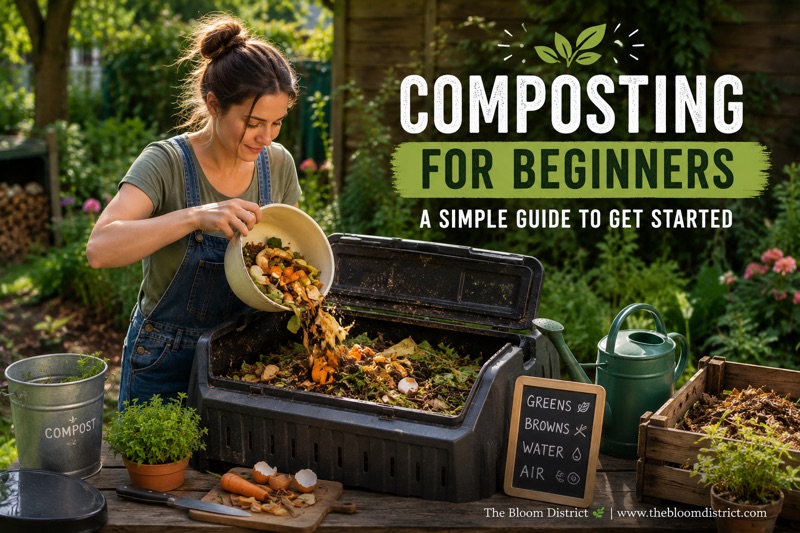
🌱 At a Glance
|
🌱 Difficulty |
🕔 Starting Time |
♻️ Compost Ready |
💰 Cost |
🌎 Best For |
|
Beginner Friendly |
30 Minutes |
2-6 Months |
Low Cost |
Gardens, Vegetables, Flowers & Houseplants |
🍃 The Magic Hidden Inside Your Kitchen Waste
Every morning, countless people throw away things like banana peels, coffee grounds, vegetable scraps, and fallen leaves without realizing they are holding valuable nutrients.
What if those everyday leftovers could become the secret ingredient behind healthier plants, richer soil, and a more beautiful garden?
This is the simple idea behind composting.
Composting is nature’s own recycling system. It transforms organic materials that would normally become waste into a dark, nutrient-rich substance that gardeners call “black gold.”
Whether you have a large backyard garden, a small balcony, or a few indoor plants, composting is one of the easiest sustainable habits you can start.
You don’t need expensive equipment or years of gardening experience.
You only need:
🌿 Organic materials
💧 The right amount of moisture
🌬 Airflow
⏳ A little patience
And nature does the rest.
🌱 What Is Compost?
Compost is a natural soil amendment created when organic materials break down through the activity of microorganisms such as bacteria, fungi, and earthworms.
During this process, these tiny organisms transform kitchen scraps and garden waste into a material filled with nutrients and beneficial life.
Unlike synthetic fertilizers that mainly provide specific nutrients, compost improves the entire soil ecosystem.
Healthy compost helps create:
🌿 Stronger roots
🌱 Better plant growth
💧 Improved moisture retention
🍃 More active soil microorganisms
Think of compost as a healthy meal for your soil.
💡 Did You Know?
Healthy soil is not just dirt. A single teaspoon of fertile soil can contain billions of microorganisms working together to support plant life.
🌍 Why Composting Matters
Modern households produce a large amount of organic waste every day.
Food scraps and yard waste often end up in landfills, where they break down without enough oxygen and can contribute to greenhouse gas emissions.
Composting gives these materials another purpose.
Instead of becoming waste, they become a resource.
🌿 The Benefits of Composting
1. Creates Healthier Soil
Compost improves soil structure by making it softer, richer, and easier for plant roots to grow through.
It helps sandy soils hold more moisture and helps heavy clay soils drain better.
2. Reduces Household Waste
A large portion of everyday kitchen waste can be composted.
Examples:
🍌 Fruit peels
🥬 Vegetable scraps
☕ Coffee grounds
🥚 Eggshells
🍂 Dry leaves
By composting, you reduce the amount of trash leaving your home.
3. Supports Stronger Plants
Plants growing in compost-rich soil often develop:
✔ Stronger root systems
✔ Healthier leaves
✔ Better resistance to stress
✔ Improved flowering and fruit production
4. Saves Money
Garden soil improvements and fertilizers can become expensive.
Creating your own compost allows you to produce a natural soil enhancer almost for free.
5. Helps the Environment
Composting supports a more sustainable gardening lifestyle by:
🌎 Reducing landfill waste
♻️ Recycling natural materials
🌱 Reducing dependence on chemical products
🌿 Compost vs. Regular Soil
Many beginners wonder:
“Why can’t I just plant directly in normal soil?”
The answer is that soil quality determines how well plants grow.
|
Feature |
Regular Soil |
Compost-Enriched Soil |
|
Nutrient Content |
Depends on location |
Naturally improved |
|
Microbial Activity |
May be low |
Rich in beneficial organisms |
|
Water Retention |
Varies |
Improved |
|
Soil Structure |
Can become compacted |
Softer and healthier |
|
Plant Support |
Average |
Excellent |
🌱 How Compost Works: Nature’s Recycling Process
Composting happens through a natural cycle.
Step 1: Adding Organic Materials
Kitchen scraps and garden waste are collected.
⬇️
Step 2: Microorganisms Begin Breaking Them Down
Bacteria and fungi consume the organic matter.
⬇️
Step 3: Heat Is Produced
Active compost piles naturally warm up as decomposition increases.
⬇️
Step 4: Materials Transform
The original scraps slowly disappear and become dark, rich compost.
⬇️
Step 5: Finished Compost Feeds Your Garden
The final product can be mixed into soil to support healthier plants.
🌿 Bloom District Tip
Think of composting as creating a tiny ecosystem. A successful compost pile is alive—it needs balance, air, moisture, and the right materials.
🪴 Who Can Start Composting?
One of the best things about composting is that almost anyone can do it.
🏡 Backyard Gardeners
A traditional compost pile or bin is perfect for larger outdoor spaces.
🌿 Small Space Gardeners
Apartment residents can use:
- Compost tumblers
- Small indoor compost containers
- Vermicomposting systems
🪴 Houseplant Lovers
Small amounts of finished compost can improve potting mixes and support indoor plants.
📌 Before You Start: The Composting Mindset
Successful composting is not about perfection.
Many beginners stop because they worry about making mistakes.
Remember:
🌱 A little compost is better than no compost.
Every leaf, peel, and plant cutting you recycle contributes to a healthier garden.
📖 Coming Next: Part 2
In the next section:
🌿 The Perfect Compost Recipe
You will learn:
- 🟢 Green vs. Brown Materials
- 🍂 The ideal compost balance
- ✅ What you can compost
- ❌ What you should avoid adding
- 🏡 Choosing the best composting method for your home
Understanding Green & Brown Materials for Healthy Compost
A successful compost pile is not created by simply throwing everything together.
Like a garden, compost needs balance.
The secret behind rich, healthy compost is understanding two essential ingredients:
🟢 Green Materials — Nitrogen-rich materials that provide energy for microorganisms.
🟤 Brown Materials — Carbon-rich materials that provide structure, airflow, and balance.
When these two groups work together, nature creates a powerful soil enhancer for your plants.
🍃 The Compost Balance: Green + Brown = Garden Gold
Imagine your compost pile as a small living ecosystem.
Green materials act like the fuel that keeps microorganisms active, while brown materials create the structure that allows oxygen to move through the pile.
Without balance:
- Too many greens → unpleasant smells and excess moisture.
- Too many browns → slow decomposition.
The goal is a compost pile that feels:
🌿 Moist like a wrung-out sponge
🌿 Warm inside
🌿 Earthy smelling
🌿 Full of natural activity
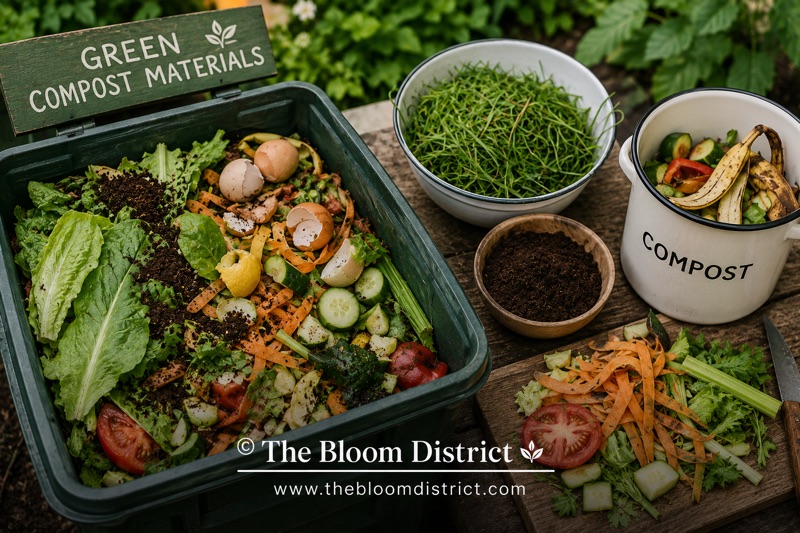
🟢 Green Materials (Nitrogen-Rich)
Green materials are usually fresh, moist, and rich in nitrogen.
They help microorganisms grow and break down organic matter faster.
✅ Great Green Compost Ingredients
|
Material |
Why It Helps |
|
🥬 Vegetable scraps |
Rich source of nutrients |
|
🍌 Fruit peels |
Break down quickly |
|
☕️ Coffee grounds |
Add nitrogen and organic matter |
|
🍵 Tea leaves |
Support decomposition |
|
🌱 Fresh grass clippings |
Activate the compost pile |
|
🌿 Fresh plant trimmings |
Add nutrients |
🟤 Brown Materials (Carbon-Rich)
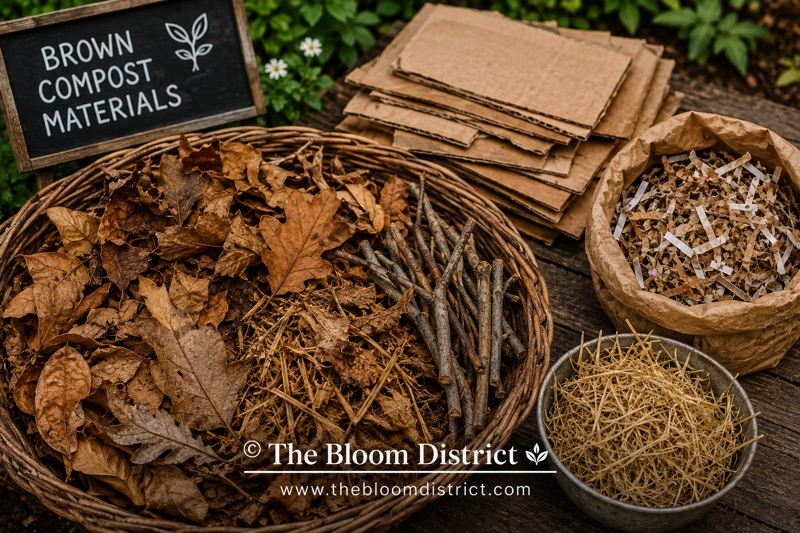
Brown materials provide carbon, which microorganisms use as an energy source.
They also help keep compost airy and prevent the pile from becoming too wet.
✅ Great Brown Compost Ingredients
|
Material |
Why It Helps |
|
🍂 Dry leaves |
Create structure and airflow |
|
📦 Shredded cardboard |
Adds carbon |
|
📰 Plain paper |
Helps balance moisture |
|
🌾 Straw |
Keeps the pile loose |
|
🌿 Small twigs |
Improves ventilation |
|
🌳 Wood chips |
Slow-release carbon |
🌱 The Golden Compost Rule
For beginners, the easiest formula is:
🟤 2–3 Parts Brown Materials
- ●
🟢 1 Part Green Materials
This balance creates the ideal environment for decomposition.
Example:
🍂 Two buckets of dry leaves
+
🥬 One bucket of kitchen scraps
=
🌿 A healthier compost pile
🌿 Bloom District Tip
Keep a container of dry leaves or shredded cardboard near your compost bin. Whenever you add food scraps, cover them with a layer of brown material to reduce odors and prevent pests.
✅ What Can You Compost?
A beginner-friendly compost pile can include many everyday materials.
🍎 Kitchen Compost Items
✅ Fruit scraps
✅ Vegetable peels
✅ Eggshells (crushed)
✅ Coffee grounds
✅ Tea leaves
✅ Nut shells (in small amounts)
🌿 Garden Compost Items
✅ Fallen leaves
✅ Grass clippings
✅ Dead flowers
✅ Small plant trimmings
✅ Untreated wood chips
✅ Weeds without seeds
🏠 Household Compost Items
Some household items can also be composted:
✅ Shredded newspaper
✅ Plain cardboard
✅ Paper bags
✅ Paper towels without chemicals
⚠️ What You Should Never Compost
Not everything organic belongs in a compost pile.
Some materials can attract pests, create odors, or introduce harmful organisms.
❌ Avoid Adding:
|
Material |
Why Avoid It |
|
🍖 Meat |
Attracts animals and pests |
|
🧀 Dairy products |
Creates unpleasant odors |
|
🍟 Oily foods |
Break down slowly |
|
🍛 Cooked leftovers |
May attract insects |
|
🐕 Pet waste |
Can contain harmful pathogens |
|
🌱 Diseased plants |
May spread diseases |
|
🌿 Weeds with seeds |
Seeds may survive |
|
🪵 Treated wood |
May contain chemicals |
⚠️ Common Mistake
Many beginners think “natural” means “compostable.” However, some natural materials can damage your compost balance or create problems.
🏡 Choosing the Right Composting Method
There is no single perfect composting method.
The best choice depends on your space, lifestyle, and gardening goals.
1. 🌿 Compost Bin
Best for: Beginners with outdoor space.
Advantages:
✅ Easy to manage
✅ Keeps compost organized
✅ Protects from animals
✅ Looks cleaner in gardens
2. 🔄 Compost Tumbler
Best for: People who want faster and easier mixing.
Advantages:
✅ Simple turning process
✅ Good airflow
✅ Great for small gardens
Consider:
May have less capacity than large compost piles.
3. 🍂 Compost Pile
Best for: Large gardens.
Advantages:
✅ Free setup
✅ Handles large amounts of waste
✅ Natural method
Consider:
Needs more space and organization.
4. 🪱 Vermicomposting (Worm Composting)
Best for: Apartments and small spaces.
Special composting worms help transform food scraps into nutrient-rich worm castings.
Perfect for:
🌱 Balcony gardens
🪴 Indoor gardeners
🏙️ Urban homes
📊 Composting Methods Comparison
|
Method |
Best For |
Speed |
Space Needed |
|
Compost Bin |
Beginners |
Medium |
Small-Medium |
|
Tumbler |
Easy maintenance |
Fast |
Small |
|
Compost Pile |
Large gardens |
Medium |
Large |
|
Vermicomposting |
Apartments |
Fast |
Very Small |
🌱 Your First Compost Setup Checklist
Before you begin, prepare:
☑ Compost container or bin
☑ Brown materials (dry leaves/cardboard)
☑ Green materials (food scraps)
☑ Water source
☑ Garden fork or tool for mixing
🌿 Bloom District Reminder
Your first compost pile does not need to be perfect. The goal is to create a healthy environment where nature can do what it does best: recycle life.
Part 3: Build Your First Compost & Transform Waste Into Garden Gold
Creating compost may seem complicated at first, but nature has already designed the process for us.
All you need is the right balance of materials, a little care, and patience.
Whether you are creating compost for vegetables, flowers, trees, or houseplants, these simple steps will help you build a healthy compost system at home.
🌱 How to Start Your First Compost Pile (Step-by-Step)
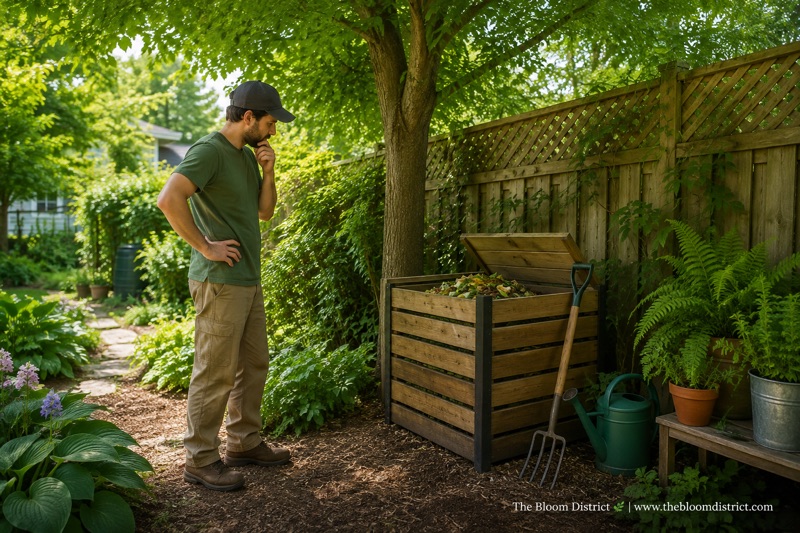
Step 1: Choose the Perfect Location
The first step is selecting the right place for your compost.
A good location should be:
🌿 Easy to access
🌤️ Partially shaded
💧 Well-drained
🌬️ Able to receive airflow
Avoid placing your compost directly against walls or in areas where water collects.
Step 2: Create the First Brown Layer
Start your compost with a foundation of brown materials.
Add:
🍂 Dry leaves
📦 Shredded cardboard
🌾 Straw
🌿 Small branches
This bottom layer allows air to enter and prevents the compost from becoming too wet.
Step 3: Add Green Materials
Now add your nitrogen-rich materials.
Examples:
🥬 Vegetable scraps
🍌 Fruit peels
☕ Coffee grounds
🌱 Fresh plant cuttings
Spread them evenly rather than creating one thick layer.
Step 4: Build Compost Layers
Continue creating alternating layers:
🟤 Brown materials
↓
🟢 Green materials
↓
🟤 Brown materials
↓
🟢 Green materials
Think of it like building a natural recipe.
Each layer contributes something important:
- Browns provide structure.
- Greens provide energy.
- Moisture activates the process.
- Oxygen keeps microorganisms healthy.
Step 5: Keep the Right Moisture Level
Compost needs moisture, but too much water can create problems.
The ideal texture:
🌧️ Like a damp sponge that has been squeezed out.
Too Dry?
Add:
💧 Small amounts of water
Too Wet?
Add:
🍂 Dry leaves
📦 Cardboard
🌾 Straw
🌿 Bloom District Tip
Check your compost once a week. If it feels slightly moist and smells like fresh soil, your compost is working correctly.
Step 6: Turn Your Compost Regularly
Turning introduces oxygen into the pile.
Oxygen helps microorganisms work faster.
Use a garden fork or compost tool to mix the materials.
Recommended schedule:
🌱 Every 1–2 weeks for faster compost
🌿 Less often for slower compost
⏳ How Long Does Compost Take?
The time depends on your method and conditions.
|
Compost Type |
Approximate Time |
|
Hot Compost |
2–3 Months |
|
Regular Compost Bin |
3–6 Months |
|
Cold Compost |
6–12 Months |
|
Vermicompost |
2–4 Months |
Factors affecting speed:
🌡️ Temperature
💧 Moisture
🌿 Material size
🌬️ Oxygen level
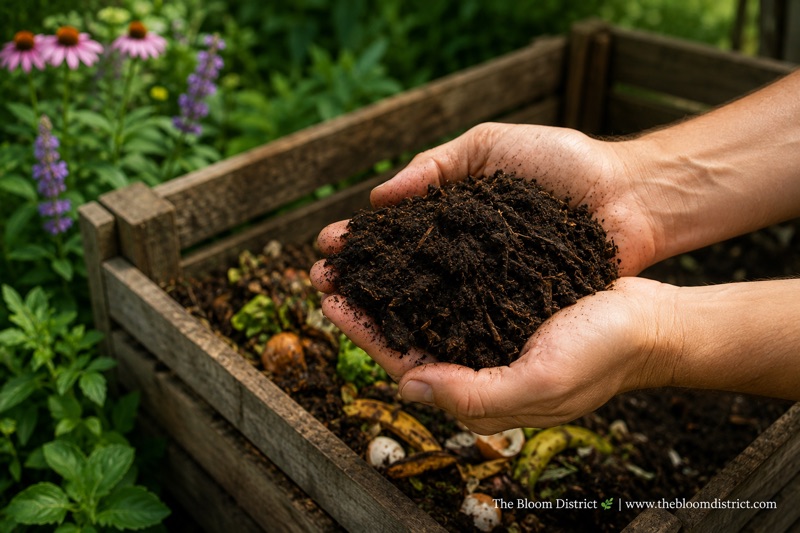
🌿 How to Know When Compost Is Ready
Finished compost has a few clear signs.
✅ The Compost Ready Test
☑ Dark brown or black color
☑ Soft, crumbly texture
☑ Earthy forest-like smell
☑ Original materials are no longer recognizable
☑ Temperature has cooled down
🌱 How to Use Finished Compost
Once your compost is ready, you can use it in many ways.
🥕 Vegetable Gardens
Mix compost into garden beds before planting.
Benefits:
✔ Better root growth
✔ Improved soil nutrients
✔ Healthier harvests
🌸 Flower Beds
Add compost around flowering plants to improve soil quality.
🪴 Houseplants
Mix a small amount with potting soil.
A good beginner ratio:
🌿 1 part compost
- ●
🌱 3 parts potting mix
🌳 Trees & Shrubs
Apply compost around the base of plants as a natural soil booster.
Avoid piling compost directly against the trunk.
⚠️ Common Compost Problems & Solutions
Even experienced gardeners sometimes face compost problems.
Here are the most common issues:
Problem 1: Bad Smell
Cause:
Too many green materials or too much moisture.
Solution:
Add more:
🍂 Dry leaves
📦 Cardboard
🌾 Straw
Mix well to increase airflow.
Problem 2: Compost Is Too Dry
Cause:
Not enough moisture.
Solution:
Add small amounts of water and mix.
Problem 3: Compost Is Not Breaking Down
Cause:
Materials may be too large or the pile lacks oxygen.
Solution:
Try:
✔ Cutting scraps smaller
✔ Turning the pile
✔ Adding more green materials
Problem 4: Flies or Pests
Cause:
Food scraps are exposed.
Solution:
Cover kitchen waste with a layer of brown materials.
⚠️ Common Mistake
Adding only kitchen scraps creates an unbalanced compost pile. Always cover food waste with dry brown materials to keep your compost healthy.
🌿 Seasonal Composting Tips
🌸 Spring
Perfect time to start a new compost pile.
Add:
🌱 Fresh plant growth
🍃 Garden cleanup waste
☀️ Summer
Hot temperatures speed up decomposition.
Remember:
💧 Monitor moisture levels.
🍂 Autumn
One of the best composting seasons.
Collect:
🍁 Fallen leaves
🌿 Garden leftovers
Dry leaves are valuable brown material.
❄️ Winter
Composting slows but does not stop.
Protect your pile by adding extra layers of brown materials.
❓ Frequently Asked Questions
Can beginners compost at home?
Yes. Composting is one of the easiest gardening practices for beginners. A small bin is enough to start.
Does compost smell bad?
A healthy compost pile should smell like fresh soil.
Bad odors usually mean the pile needs more brown materials or airflow.
Can I compost indoors?
Yes.
Vermicomposting and small compost systems work well for apartments.
How often should I turn compost?
Every 1–2 weeks helps speed up decomposition, but occasional turning also works.
Can compost replace fertilizer?
Compost improves soil health, but some plants may still benefit from additional nutrients depending on their needs.
🌿 Quick Summary
Composting Made Simple
🌱 Collect organic materials
- ●
🟤 Balance greens and browns
- ●
💧 Maintain moisture
- ●
🌬️ Provide airflow
- ●
⏳ Give nature time
=
🌿 Rich compost for healthier plants
🌎 Final Thoughts
Composting is more than a gardening technique—it is a simple way to reconnect with nature.
The food scraps from your kitchen, the leaves from your garden, and the plants you trim can all become part of a natural cycle that creates healthier soil and stronger plants.
Every compost pile tells the same story:
Something that was once considered waste can become the foundation of new growth.
So the next time you hold a banana peel or a handful of fallen leaves, remember:
You are not throwing something away—you are creating the future of your garden.
Related Articles
Comments
Post a Comment