
Learn the most common gardening mistakes beginners make and discover simple, practical solutions to grow healthier plants, improve your soil, and enjoy a thriving garden all year.
At a Glance
|
Feature |
Details |
|
Difficulty |
Beginner |
|
Reading Time |
13-15 minutes |
|
Best For |
Home gardeners and beginners |
|
Main Goal |
Prevent common mistakes before they damage your plants |
|
Suitable For |
Outdoor gardens, raised beds, containers, balconies |
Every Beautiful Garden Starts With a Few Mistakes
Imagine walking through a garden filled with vibrant flowers, lush vegetables, and healthy green leaves.
Now imagine discovering that the gardener behind it once struggled with dying tomatoes, yellow leaves, and flowers that never bloomed.
The truth is simple:
Every experienced gardener was once a beginner.
The difference isn’t that experts never make mistakes—it’s that they learn from them.
Whether you’ve just planted your first herb pot on a balcony or are building your dream backyard garden, understanding the most common gardening mistakes can save you time, money, and countless plants.
In this guide, you’ll learn not only what these mistakes are but also why they happen and, most importantly, how to avoid them.
Why Do Gardening Mistakes Happen?
Gardening seems simple.
Plant a seed.
Add water.
Wait.
Unfortunately, nature is far more complex.
Every plant has different needs for:
- Sunlight
- Water
- Temperature
- Soil
- Humidity
- Air circulation
- Nutrients
Ignoring even one of these factors can affect plant health.
Fortunately, most gardening problems are completely preventable.
Did You Know?
Many plants die from too much care rather than too little.
Overwatering, excessive fertilizer, and constant interference are responsible for far more plant deaths than simple neglect.
The 10 Most Common Gardening Mistakes
Let’s look at the mistakes that affect thousands of gardeners every year.
Mistake #1 — Choosing the Wrong Plant for Your Climate
One of the biggest mistakes happens before planting even begins.
Many people buy plants because they’re beautiful in the garden center.
But beauty doesn’t guarantee success.
A tropical plant may struggle through cold winters.
A moisture-loving fern may quickly dry out in a hot, sunny location.
Likewise, alpine plants often decline in humid environments.
Choosing plants that naturally thrive in your local conditions dramatically increases your chances of success.
Why It Matters
Plants adapted to your climate:
- Grow faster
- Require less maintenance
- Need less watering
- Resist diseases better
- Produce more flowers and fruit
Better Choices
Instead of asking:
“What’s the prettiest plant?”
Ask:
“Which plants naturally grow well in my area?”
Native and climate-adapted plants almost always outperform exotic species with demanding care requirements.
Pro Tip
Before buying any plant, check its label for:
- USDA Hardiness Zone
- Sun requirements
- Mature size
- Water needs
- Soil preference
Spending just one minute reading the label can save months of disappointment.
Mistake #2 — Planting in the Wrong Location
Many beginners underestimate how important location is.
A tomato planted in heavy shade may survive—but it will rarely produce an abundant harvest.
Similarly, a shade-loving hosta placed under harsh afternoon sun may develop scorched, brown leaves.
Every Plant Needs the Right Amount of Light
|
|
Daily Sunlight |
|
Full Sun |
6-8+ hours |
|
Partial Sun |
4-6 hours |
|
Partial Shade |
2-4 hours |
|
Full Shade |
Less than 2 hours |
Before planting, spend a day observing your garden.
Notice where sunlight falls in the morning, afternoon, and evening.
Many gardeners are surprised to discover that areas they assumed were sunny receive only a few hours of direct light.
Warning
Don’t rely on how sunny your garden looks.
Instead, count the actual hours of direct sunlight.
Light reflected from walls or filtered through trees doesn’t count as full sun.
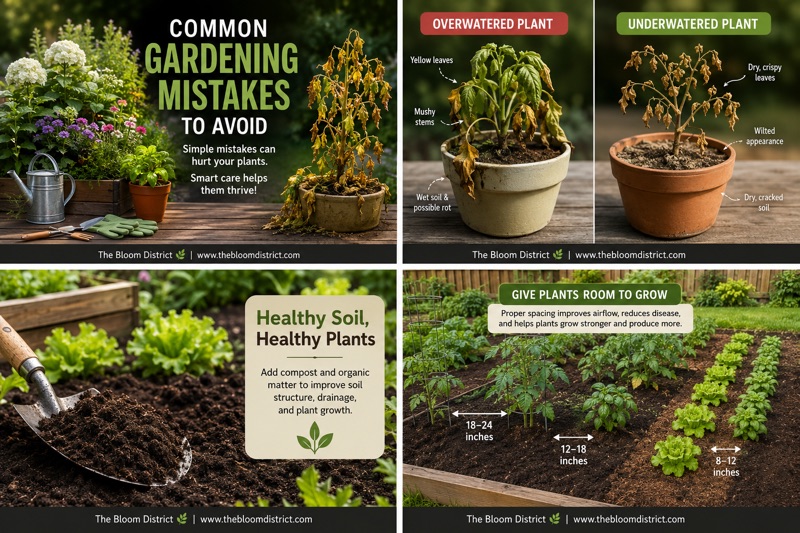
Mistake #3 — Overwatering
If there were one mistake responsible for more dead plants than any other, it would be overwatering.
New gardeners often believe that watering every day shows good care.
In reality, constantly wet soil prevents roots from breathing.
Healthy roots need both water and oxygen.
When the soil remains saturated, oxygen disappears, and roots begin to rot.
Once root rot develops, plants struggle to absorb water—even though the soil is soaking wet.
Ironically, an overwatered plant often looks thirsty.
Signs of Overwatering
Watch for these common symptoms:
- Yellowing leaves
- Soft or mushy stems
- Mold growing on the soil surface
- Fungus gnats flying around pots
- Drooping leaves despite wet soil
- A sour smell coming from the pot
How to Fix It
If you suspect overwatering:
- Allow the soil to dry before watering again.
- Check that containers have drainage holes.
- Improve drainage by mixing compost or coarse organic matter into the soil.
- Empty saucers beneath pots after watering.
- Adjust your watering schedule based on the weather, not the calendar.
Remember: It’s usually easier for a plant to recover from slight dryness than from root rot.
Mistake #4 — Underwatering
While overwatering is one of the leading causes of plant loss, underwatering can be just as harmful.
Plants rely on water to transport nutrients, regulate temperature, and support healthy growth. When they don’t receive enough moisture, they begin conserving energy, slowing growth, and eventually showing signs of stress.
Unlike overwatering, the symptoms of underwatering are often easier to recognize—but many gardeners notice them too late.
Signs of Underwatering
Keep an eye out for these warning signs:
- Dry, crispy leaf edges
- Wilting during the hottest part of the day
- Slow or stunted growth
- Dry, cracked soil
- Flower buds dropping before opening
- Leaves turning brown from the tips inward
Container plants usually dry out much faster than those planted in the ground, especially during hot summer weather.
Pro Tip
Instead of watering a little every day, water deeply until moisture reaches the root zone.
Deep watering encourages roots to grow downward, making plants more drought-resistant and healthier in the long term.
Deep Watering vs. Frequent Light Watering
|
Deep Watering |
Light Watering |
|
Encourages deep roots |
Creates shallow roots |
|
Plants tolerate heat better |
Plants dry out quickly |
|
Less frequent watering |
Requires daily watering |
|
Stronger plant growth |
Weaker root system |
Mistake #5 — Ignoring Soil Quality
Healthy plants begin with healthy soil.
Many gardeners spend hundreds of dollars on flowers and shrubs while overlooking the foundation that supports them.
Poor soil can limit growth even if everything else is done correctly.
Think of soil as your garden’s pantry—it stores water, nutrients, oxygen, and beneficial microorganisms that plants depend on every day.
Signs of Poor Soil
Your soil may need improvement if you notice:
- Water sitting on the surface
- Hard, compacted ground
- Plants growing very slowly
- Yellow leaves despite fertilizing
- Roots struggling to spread
How to Improve Garden Soil
Adding organic matter is one of the simplest and most effective ways to improve almost any soil type.
Excellent options include:
- Compost
- Aged manure
- Leaf mold
- Worm castings
- Shredded leaves
- Organic mulch
These materials improve drainage in clay soils while helping sandy soils retain moisture.
Did You Know?
A single teaspoon of healthy garden soil can contain billions of beneficial microorganisms that recycle nutrients and support strong plant growth.
Healthy soil is alive.
Mistake #6 — Planting Too Close Together
Tiny seedlings often make gardeners think they have plenty of room.
A few months later, those same plants may be competing for every drop of water and every ray of sunlight.
Crowded plants create the perfect environment for disease because humid air becomes trapped between the leaves.
Poor airflow also increases the risk of fungal infections.
Problems Caused by Overcrowding
- Poor air circulation
- Faster spread of diseases
- Competition for nutrients
- Reduced flowering
- Smaller vegetables
- Increased pest problems
Give Plants Room to Grow
Always check the mature size—not the size at the garden center.
A tomato seedling may only be six inches tall today, but it could grow more than five feet by midsummer.
Following spacing recommendations allows plants to reach their full potential.
Expert Tip
It may look like you are “wasting space” when planting.
In reality, proper spacing almost always produces healthier plants and larger harvests.
Mistake #7 — Using Too Much Fertilizer
Many beginners assume fertilizer works like vitamins:
“If a little is good, more must be better.”
Unfortunately, plants don’t work that way.
Too much fertilizer can damage roots, encourage weak leafy growth, and even reduce flowering and fruit production.
Excess nutrients may also wash into nearby waterways, affecting the environment.
Signs of Overfertilizing
Watch for:
- Brown leaf tips
- White crust on soil
- Weak, floppy stems
- Few flowers
- Burned roots
- Rapid but unhealthy growth
Fertilizer Best Practices
✔ Read package directions carefully.
✔ Apply during active growth.
✔ Water after fertilizing unless instructed otherwise.
✔ Never fertilize dry soil.
✔ Use compost whenever possible.
Organic vs. Synthetic Fertilizers
|
Organic |
Synthetic |
|
Releases nutrients slowly |
Fast nutrient release |
|
Improves soil health |
Does not improve soil structure |
|
Lower risk of burning roots |
Can burn plants if overused |
|
Supports beneficial microbes |
Mainly feeds plants directly |
Both types can be effective, but many home gardeners prefer organic fertilizers because they improve the soil over time.
Mistake #8 — Forgetting to Mulch
Mulch is one of the easiest improvements you can make to almost any garden.
Yet it’s also one of the most overlooked.
A simple layer of mulch helps protect soil from harsh weather while reducing maintenance throughout the growing season.
Benefits of Mulch
Mulch helps:
- Reduce weeds
- Keep soil cool during summer
- Protect roots during winter
- Retain moisture
- Reduce soil erosion
- Improve soil as it breaks down
Common Organic Mulches
- Bark chips
- Straw
- Pine needles
- Shredded leaves
- Compost
- Wood chips
Apply mulch about 2–3 inches (5–8 cm) deep, leaving a small gap around stems and tree trunks to prevent excess moisture from causing rot.
Common Mistake
Avoid piling mulch directly against the base of trees or plants.
This “mulch volcano” traps moisture, encourages disease, and may damage bark over time.
Quick Mid-Article Checklist
Before moving on, ask yourself:
- ✅ Did I choose plants suited to my climate?
- ✅ Am I watering based on soil moisture rather than a schedule?
- ✅ Is my soil rich in organic matter?
- ✅ Are my plants spaced correctly?
- ✅ Am I fertilizing responsibly?
- ✅ Have I added mulch to protect the soil?
If you answered “yes” to most of these questions, you’re already avoiding many of the mistakes that cause beginner gardens to struggle.
Mistake #9 — Pruning at the Wrong Time
Pruning is one of the best ways to keep plants healthy, encourage new growth, and improve flowering. However, pruning at the wrong time—or removing too much—can weaken a plant and reduce blooms or fruit production.
Many gardeners make the mistake of cutting back plants whenever they have free time, without considering the plant’s natural growth cycle.
Why Timing Matters
Plants store energy differently throughout the year.
Removing branches at the wrong time can:
- Eliminate flower buds
- Slow new growth
- Increase the risk of disease
- Reduce fruit production
- Stress the plant
General Pruning Guide
|
Plant Type |
Best Time to Prune |
|
Spring-flowering shrubs |
After flowering |
|
Summer-flowering shrubs |
Late winter or early spring |
|
Fruit trees |
During dormancy |
|
Dead or damaged branches |
Anytime |
Always use clean, sharp pruning tools and disinfect blades between plants to help prevent the spread of disease.
Pro Tip
When pruning, remove no more than one-third of the plant at a time. Heavy pruning can shock the plant and slow its recovery.
Mistake #10 — Ignoring Pests Until They Become a Problem
A few insects may not seem like a concern, but many garden pests reproduce quickly.
A small infestation can become a major problem within days if left unchecked.
The key is regular observation.
Healthy gardens are built on prevention rather than emergency treatments.
Common Garden Pests
Some of the most common visitors include:
- Aphids
- Spider mites
- Whiteflies
- Mealybugs
- Caterpillars
- Slugs and snails
Inspect your plants every week, paying special attention to:
- The undersides of leaves
- New shoots
- Flower buds
- Stem joints
Early detection often means simple solutions.
Warning Signs
Look for:
- Tiny holes in leaves
- Sticky residue (honeydew)
- Curled foliage
- Fine webbing
- Discolored spots
- Chewed stems
Natural Prevention Tips
- Encourage beneficial insects like ladybugs.
- Water plants at the base instead of wetting the leaves.
- Remove dead or infected foliage promptly.
- Avoid overcrowding plants.
- Keep the garden clean and free of debris.
Seasonal Gardening Mistakes
Each season presents its own challenges. Adjusting your gardening routine throughout the year can prevent many common problems.
|
Season |
Common Mistake |
Better Approach |
|
Spring |
Planting too early |
Wait until the risk of frost has passed. |
|
Summer |
Watering during the hottest hours |
Water early in the morning. |
|
Autumn |
Leaving diseased leaves on the ground |
Remove and dispose of infected plant material. |
|
Winter |
Neglecting plant protection |
Mulch and protect sensitive plants from frost. |
Gardening isn’t about following the same routine year-round—it’s about adapting to the changing seasons.
Expert Gardening Tips
A thriving garden isn’t built through luck. It’s built through consistent observation and small daily habits.
Here are a few practices experienced gardeners rely on:
- Walk through your garden regularly to spot problems early.
- Water deeply rather than frequently.
- Feed the soil with compost instead of relying only on fertilizer.
- Rotate vegetable crops each season to reduce pests and diseases.
- Label new plants with their names and care requirements.
- Keep a simple gardening journal to record planting dates, weather, and successes.
Remember, the healthiest gardens are usually the ones that receive consistent attention—not constant intervention.
Frequently Asked Questions
What is the most common gardening mistake?
Overwatering is one of the most common mistakes. Constantly wet soil deprives roots of oxygen and can lead to root rot.
How often should I water my plants?
Watering frequency depends on the plant type, soil, weather, and container size. Check the soil first—if the top inch (about 2.5 cm) is dry, it’s usually time to water.
Is compost better than fertilizer?
Compost and fertilizer serve different purposes. Compost improves soil structure and supports beneficial organisms, while fertilizer supplies nutrients. Using both wisely often gives the best results.
Why are my plant leaves turning yellow?
Yellow leaves can result from overwatering, underwatering, nutrient deficiencies, poor drainage, pests, or inadequate light. Check growing conditions before assuming a single cause.
Can plants recover from gardening mistakes?
Yes. Many plants recover well once the underlying problem is corrected, especially if it’s identified early.
Should I prune every plant every year?
Not necessarily. Some plants require annual pruning, while others need very little. Always research the specific needs of each plant.
How can I prevent weeds naturally?
Applying organic mulch, removing weeds before they produce seeds, and maintaining healthy, dense plantings are some of the most effective natural methods.
How long does it take to become a good gardener?
Gardening is a lifelong learning experience. With patience, observation, and practice, you’ll gain confidence season after season.
Quick Summary
Every gardener makes mistakes—but each one is an opportunity to learn.
By choosing plants suited to your climate, improving your soil, watering correctly, spacing plants properly, fertilizing responsibly, pruning at the right time, and monitoring for pests, you’ll build a healthier, more resilient garden.
Don’t aim for perfection. Aim for progress.
A flourishing garden is created through patience, observation, and a willingness to learn from every season.
Related Articles
Comments
Post a Comment