
How to Save Your Plant Before Root Rot Takes Over
🌿 When Water Becomes the Enemy
You water your favorite plant regularly.
You provide sunlight.
You give it attention.
But suddenly…
The leaves start turning yellow.
The stems become weak.
The plant looks tired and unhealthy.
Your first thought might be:
“Maybe my plant needs more water.”
So you water it again.
Unfortunately, the real problem may be the opposite.
The roots may be drowning.
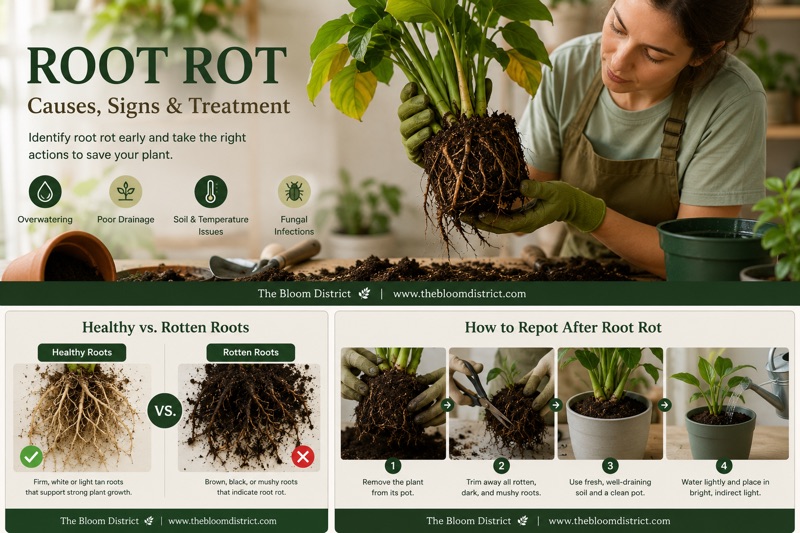
This hidden problem is called root rot, and it is one of the most common reasons indoor and outdoor plants fail.
The good news?
If you notice the warning signs early, you can often save your plant and bring it back to life. 🌱
🌱 Quick Plant Health Check
|
Question |
If Your Answer Is ( Yes ) |
|
Does the soil stay wet for many days? |
⚠️ Possible root problems |
|
Are leaves turning yellow? |
⚠️ Check the roots |
|
Does the plant wilt even after watering? |
⚠️ Root damage may exist |
|
Does the soil smell bad? |
⚠️ Possible decay |
🌿 What Is Root Rot?
Root rot is a condition where plant roots begin to decay because they stay wet for too long.
Healthy roots need:
✅ Water
✅ Nutrients
✅ Oxygen
When soil becomes constantly soaked, oxygen disappears. The roots become weak and vulnerable to harmful fungi and bacteria.
Over time:
Healthy roots → Weak roots → Rotten roots → Declining plant
⚠️ Main Causes of Root Rot
1. Too Much Water 💧
The biggest mistake gardeners make is believing:
“More water means faster growth.”
But plants need balance.
Excess water creates:
- Poor oxygen supply
- Weak roots
- Fungal growth
- Root decay
🌱 Gardener Tip:
Always check the soil before watering. A watering schedule should follow the plant’s needs, not the calendar.
2. Poor Drainage 🪴
Even careful watering can cause root rot if water has nowhere to go.
Common drainage problems:
❌ Pots without holes
❌ Heavy compact soil
❌ Water collecting at the bottom of containers
Healthy soil should allow:
Water ↓
Air ↑
Roots 🌱
3. Wrong Pot Size
A very large pot may look beautiful, but it can hold too much moisture around a small root system.
Small roots + Large wet soil = Higher risk of root rot
4. Fungal Problems
Wet conditions encourage harmful organisms such as:
- Pythium
- Phytophthora
- Fusarium
They attack weak roots and spread quickly in unhealthy soil.
🚨 Warning Signs of Root Rot
1. Yellow Leaves 🍂
Yellow leaves are often the first visible clue.
The plant may look hungry, but the real problem is that damaged roots cannot deliver nutrients properly.
2. Wilting Despite Wet Soil
This is one of the biggest warning signs.
A thirsty plant usually improves after watering.
A plant with root rot may continue to wilt because:
The roots cannot absorb the water.
3. Slow or Stopped Growth
Root problems affect the entire plant.
You may notice:
- Smaller new leaves
- Weak stems
- No new growth
4. Bad Soil Smell
Healthy soil smells fresh and earthy.
A rotten smell usually means:
⚠️ Decaying roots
⚠️ Excess moisture
⚠️ Poor airflow
5. Dark, Soft Roots
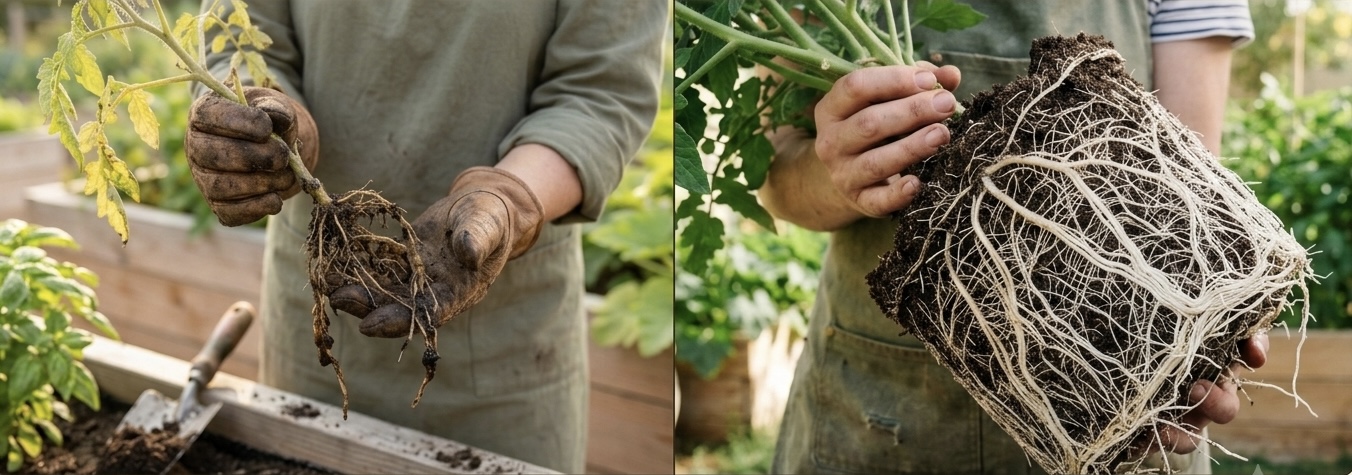
The most accurate test is checking the roots.
|
Healthy Roots 🌿 |
Rotten Roots ⚠️ |
|
White or cream color |
Brown or black |
|
Firm texture |
Soft and mushy |
|
Fresh smell |
Bad odor |
|
Strong growth |
Weak and damaged |
🔍 Root Rot Diagnosis Checklist
Check your plant:
☐ Soil stays wet for a long time
☐ Leaves turn yellow
☐ Plant wilts after watering
☐ Soil smells unpleasant
☐ Roots are dark and soft
3 or more signs?
It is time to inspect the roots.
🌱 How to Treat Root Rot (5 Simple Steps)
Step 1: Remove the Plant Carefully
Take the plant out of its pot.
Gently remove the soil around the roots and examine the damage.
Step 2: Cut Away Damaged Roots ✂️
Using clean scissors:
Remove:
❌ Black roots
❌ Soft roots
❌ Mushy areas
Keep:
✅ Firm roots
✅ Healthy sections
Step 3: Replace the Soil
Never reuse infected soil.
Use a fresh, breathable mix containing:
- Quality potting soil
- Perlite
- Coconut coir
- Compost
Step 4: Choose the Right Pot
Your pot should have:
✅ Drainage holes
✅ Suitable size
✅ Good airflow around roots
Step 5: Help Your Plant Recover
After treatment:
☀️ Provide bright indirect light
💧 Water carefully
🌱 Avoid fertilizer until recovery begins
🌿 Root Rot Prevention Guide
The Golden Rules:
💧 Water Smart
Do not water because “it is watering day.”
Water because your plant needs it.
🪴 Improve Soil Quality
Good soil is not just dirt.
It is a living environment that should balance:
- Moisture
- Air
- Nutrients
🌱 Match Plants With Their Needs
Some plants love moisture.
Others prefer dry soil.
Understanding your plant is the first step to preventing problems.
🌵 Plants That Commonly Suffer From Root Rot
|
Plant |
Risk |
Why? |
|
Snake Plant |
🔴 High |
Stores water in leaves |
|
Succulents |
🔴 High |
Need very fast drainage |
|
Peace Lily |
🟠 Medium |
Often overwatered |
|
Pothos |
🟠 Medium |
Popular indoor plant with frequent watering mistakes |
|
Ferns |
🟡 Medium |
Sensitive to poor airflow |
🌱 Before & After: Saving a Plant
|
Before Treatment |
After Recovery |
|
Yellow leaves |
New healthy growth |
|
Weak stems |
Stronger structure |
|
Rotten roots |
Fresh healthy roots |
|
Wet soil |
Balanced moisture |
💡 Expert Gardening Tips
🌿 Tip 1: A slightly dry plant is usually easier to save than an overwatered plant.
🌿 Tip 2: Always check roots when repotting.
🌿 Tip 3: Clean your gardening tools after cutting infected roots.
🌿 Tip 4: Prevention is easier than recovery.
Frequently Asked Questions
Can a plant recover from root rot?
Yes. If some healthy roots remain, many plants can recover with proper treatment.
Should I remove all rotten roots?
Yes. Any soft, dark, or damaged roots should be removed.
How long does recovery take?
Recovery can take several weeks depending on the plant type and the amount of damage.
Can root rot spread to other plants?
Yes. Infected soil and dirty tools can transfer harmful organisms.
🌿 Final Thoughts
Root rot is a silent problem that begins underground, but its effects appear throughout the entire plant.
The secret to healthy plants is not simply giving more water.
It is creating the right balance:
🌱 Healthy soil
💧 Correct watering
☀️ Proper light
🌿 Strong roots
Remember:
A healthy garden begins beneath the surface.
Related Articles
- Why Are My Plant Leaves Turning Yellow?
- How to Get Rid of Fungus Gnats Naturally
- Root Rot: Causes, Signs, and Treatment
- White Powder on Plant Leaves Explained
- How to Treat Spider Mites on Houseplants
- Common Plant Diseases and How to Prevent Them
- Why Is My Plant Drooping?
- How to Stop Leaf Curl Naturally
Comments
Post a Comment