
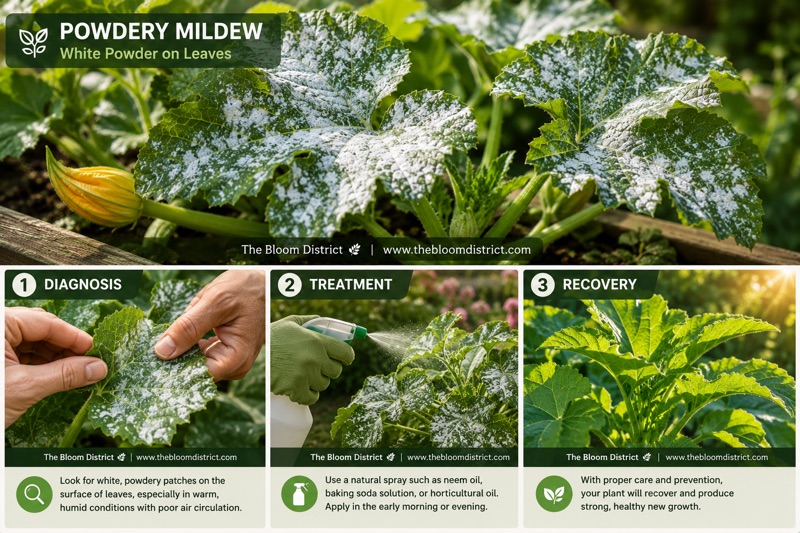
When Your Plant Looks Like It Was Dusted With Flour…
You walk into your garden in the morning, expecting to see fresh green leaves reaching toward the sunlight.
But something looks different.
A strange white layer has appeared on your favorite rose, vegetable plant, or houseplant. At first, it looks like harmless dust. You wipe a leaf, but a few days later… the white coating returns.
This is not ordinary dirt.
In many cases, your plant is dealing with one of the most common fungal problems in gardening:
Powdery mildew.
The good news?
Your plant can often recover — especially when you recognize the signs early.
In this guide, we will uncover:
🌿 What the white powder really is
🔍 How to identify the problem
🧪 Natural treatments that work
🛡 How to stop it from coming back
🌱 Quick Plant Diagnosis
Before treating your plant, identify what you are seeing.
|
What You Notice |
Most Likely Cause |
First Action |
|
White powder that looks like flour |
Powdery mildew fungus |
Improve airflow + treat fungus |
|
White cotton-like clusters |
Mealybugs |
Remove insects |
|
Hard white spots on leaves |
Mineral deposits |
Clean leaves |
|
Gray dusty layer |
Dirt or pollution |
Wash foliage |
💡 Plant Doctor Tip:
If the white layer spreads from leaf to leaf, it is most likely a fungal problem.
What Is the White Powder on Plant Leaves?
The mysterious white coating is usually powdery mildew, a fungal disease that grows on the surface of leaves, stems, and flowers.
Unlike many plant diseases, powdery mildew does not need wet leaves to survive.
It prefers conditions that many gardens accidentally create:
🌡 Warm temperatures
💧 High humidity
🌿 Crowded plants
🍃 Poor air movement
The fungus slowly covers the leaf surface, reducing the plant’s ability to absorb sunlight and grow normally.
🔍 How to Recognize Powdery Mildew
Early Signs
The first warning signs are usually small:
- Tiny white spots
- A dusty appearance on leaves
- White patches near leaf veins
At this stage, treatment is much easier.
Advanced Signs
If ignored, the problem can become more serious:
⚠️ Leaves become yellow
⚠️ New growth becomes twisted
⚠️ Flowers become fewer
⚠️ Plant growth slows down
🌿 Why Does Powdery Mildew Appear?
1. Your Plants Are Too Close Together
A crowded garden may look beautiful, but plants need breathing space.
When leaves touch each other:
- Air movement decreases
- Moisture stays longer
- Fungal spores spread faster
Garden Fix:
✂️ Prune crowded branches
↔️ Increase spacing between plants
2. Too Much Humidity
Powdery mildew loves humid environments.
Common causes:
- Overwatering
- Poor ventilation
- Indoor plants in closed rooms
- Dense foliage
Garden Fix:
Water the soil, not the leaves.
3. Weak Plant Health
A stressed plant is easier for diseases to attack.
Common causes:
- Poor soil
- Lack of nutrients
- Incorrect lighting
- Root problems
🌱 Healthy plants naturally defend themselves better.
🌸 Plants Commonly Affected
Powdery mildew can appear on many popular garden plants:
🌹 Roses
🍅 Tomatoes
🥒 Cucumbers
🎃 Pumpkins
🌺 Zinnias
🍇 Grapevines
🌿 Lilacs
🪴 Some houseplants
🧪 Natural Treatments for White Powder on Leaves
Solution 1: Baking Soda Spray
One of the most popular homemade treatments.
You Need:
- 1 teaspoon baking soda
- 1 liter water
- Few drops of mild liquid soap
How To Apply:
- Mix ingredients.
- Spray both sides of leaves.
- Repeat every 7–10 days.
⚠️ Always test on a small area first.
Solution 2: Neem Oil
Neem oil is widely used by gardeners because it can help manage fungal issues and some pests.
Best practice:
✅ Spray in the evening
✅ Avoid strong sunlight after application
✅ Follow product instructions
Solution 3: Remove Infected Leaves
Sometimes the best treatment is removing the problem early.
Steps:
✂️ Cut infected leaves
🗑 Dispose of them
🧼 Clean your tools afterward
Do not place infected leaves in compost.
⚠️ Common Mistakes Gardeners Make
❌ Spraying water directly on leaves
❌ Ignoring early white spots
❌ Planting too closely
❌ Using too much fertilizer
❌ Keeping infected leaves on the plant
🌿 Plant Doctor Tips: Keep Your Garden Powder-Free
✔ Give plants enough sunlight
✔ Improve air circulation
✔ Keep soil healthy
✔ Water early in the morning
✔ Inspect leaves weekly
A five-minute weekly check can prevent a major problem later.
How to Restore Your Plant and Prevent the Problem From Returning
🌱 The Recovery Plan: From Diseased Leaves to Healthy Growth
Seeing white powder on your plant can feel worrying, but plants are surprisingly resilient.
The goal is not only to remove the visible white coating — it is to create an environment where the fungus cannot easily return.
Follow this simple recovery path:
Step 1: Remove the Worst Damage ✂️
Start by inspecting your plant carefully.
Remove:
✅ Leaves covered with heavy white patches
✅ Damaged stems
✅ Weak or dying growth
Keep lightly affected leaves if possible, because they still help the plant produce energy.
Plant Doctor Tip 🌿:
Do not remove more than one-third of the plant’s leaves at once. Plants need healthy foliage to recover.
Step 2: Give Your Plant More Breathing Space 🍃
A healthy plant needs air just like humans need oxygen.
Improve airflow by:
- Moving indoor plants away from crowded corners
- Pruning dense branches
- Separating plants that touch each other
Think of your garden as a living room:
Too many plants in a small space create the perfect environment for problems.
Step 3: Create a Stronger Growing Environment 🌱
A healthy plant is the best defense against disease.
Support your plant with:
☀️ Proper Light
Insufficient light creates weak growth.
🌿 Healthy Soil
Good soil supports stronger roots.
💧 Correct Watering
Avoid:
❌ Constantly wet soil
❌ Frequent shallow watering
❌ Wet leaves overnight
Before and After Recovery Guide
|
Before Treatment |
After Proper Care |
|
White powder covering leaves |
Clean green foliage |
|
Slow plant growth |
New healthy growth |
|
Yellowing leaves |
Stronger leaf color |
|
Weak flowering |
Better blooms |
🛡 The Prevention System: Keep White Powder Away
The best gardeners do not only treat problems.
They prevent them.
Weekly Plant Check Routine (5 Minutes)
Once a week:
🔍 Look under leaves
🌱 Check new growth
💧 Feel the soil moisture
✂️ Remove damaged leaves
Early detection saves your plant.
Natural Prevention Habits
1. Water the Right Way
The best time:
🌅 Early morning
Why?
- Water has time to absorb
- Leaves dry faster
- Humidity decreases
2. Avoid Excess Nitrogen Fertilizer
Too much nitrogen creates:
- Fast but weak growth
- Soft leaves
- Higher disease risk
Use balanced fertilizer instead.
3. Choose Resistant Plants
Some plant varieties naturally handle fungal problems better.
When buying plants, look for varieties labeled:
✔ Disease resistant
✔ Powdery mildew resistant
🌿 Indoor Plant Care Tips
Powdery mildew is not only an outdoor problem.
Indoor plants can also suffer.
To protect houseplants:
🪴 Avoid overcrowding pots
🪟 Provide bright indirect light
🌬 Improve room airflow
💧 Avoid overwatering
Frequently Asked Questions 🌱
Can powdery mildew kill my plant?
Usually, powdery mildew does not kill healthy plants quickly. However, severe infections can weaken plants and reduce flowering, fruit production, and overall growth.
Should I throw away a plant with white powder?
Not necessarily.
Most plants can recover with:
- Early treatment
- Better airflow
- Proper care
Can I use vinegar to remove powdery mildew?
Vinegar is sometimes suggested online, but strong vinegar solutions may damage plant tissues.
Safer options include:
- Baking soda sprays
- Neem oil
- Commercial fungicides
Why does powdery mildew keep coming back?
It often returns because the original conditions remain:
- High humidity
- Poor airflow
- Crowded plants
- Weak plant health
Treating the fungus without fixing the environment usually leads to repeated problems.
Is powdery mildew contagious between plants?
Yes.
Spores can spread through:
🌬 Wind
🪴 Plant contact
✂️ Dirty gardening tools
🌸 Final Thoughts: A Small Problem With a Simple Solution
That mysterious white layer on your leaves is your plant sending a message:
“Something in my environment needs attention.”
By improving airflow, balancing watering, removing infected parts, and supporting healthy growth, you can help your plants return to their natural beauty.
A healthy garden is not a garden without problems.
It is a garden where problems are noticed early and handled with care. 🌿
Related Articles
- Why Are My Plant Leaves Turning Yellow?
- How to Get Rid of Fungus Gnats Naturally
- Root Rot: Causes, Signs, and Treatment
- White Powder on Plant Leaves Explained
- How to Treat Spider Mites on Houseplants
- Common Plant Diseases and How to Prevent Them
- Why Is My Plant Drooping?
- How to Stop Leaf Curl Naturally
Comments
Post a Comment