
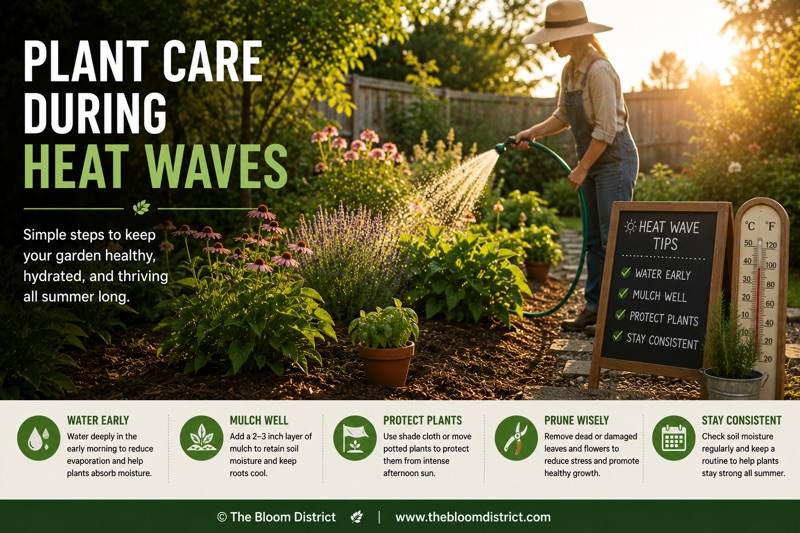
🌿 Plant Care During Heat Waves
When temperatures climb, your plants don’t just get thirsty—they struggle to survive. Leaves scorch, flowers wilt, vegetables stop producing, and even established trees can suffer lasting damage. Fortunately, a few smart gardening practices can dramatically improve your plants’ ability to withstand extreme heat.
Whether you’re caring for houseplants, flower beds, vegetable gardens, or young trees, this guide explains exactly how to protect them before, during, and after a heat wave.
📋 At a Glance
|
Topic |
Quick Answer |
|
Best watering time |
Early morning |
|
Watering frequency |
Deep watering, less often |
|
Should you fertilize? |
No, wait until temperatures cool |
|
Best mulch thickness |
2-4 inches (5-10 cm) |
|
Shade needed? |
Yes for sensitive plants |
|
Pruning during heat? |
Avoid heavy pruning |
|
Container plants |
Require extra attention |
📚 Table of Contents
- What Happens to Plants During a Heat Wave?
- Signs of Heat Stress
- Which Plants Are Most Vulnerable?
- 15 Ways to Protect Plants During Extreme Heat
- Indoor Plant Care During Heat Waves
- Vegetable Garden Heat Protection
- Trees and Shrubs During Heat Waves
- Plants That Love Hot Weather
- Common Heat Wave Mistakes
- Frequently Asked Questions
- Quick Summary
🌡️ What Happens to Plants During a Heat Wave?
When temperatures remain unusually high for several days, plants begin losing water faster than their roots can replace it.
As soil dries rapidly:
- Roots struggle to absorb moisture.
- Leaves lose water through transpiration.
- Growth slows dramatically.
- Flowers and fruits may drop.
- Photosynthesis becomes less efficient.
- Some plants enter survival mode.
Prolonged heat combined with dry soil can permanently damage plant tissues.
🔍 Heat Stress vs. Drought Stress
|
Heat Stress |
Drought Stress |
|
High temperatures |
Lack of water |
|
Leaves curl upward |
Leaves droop downward |
|
Sun scorch appears |
Entire plant wilts |
|
Flowers abort |
Growth stops |
|
Can occur even with moist soil |
Soil is dry |
Many plants experience both at the same time.
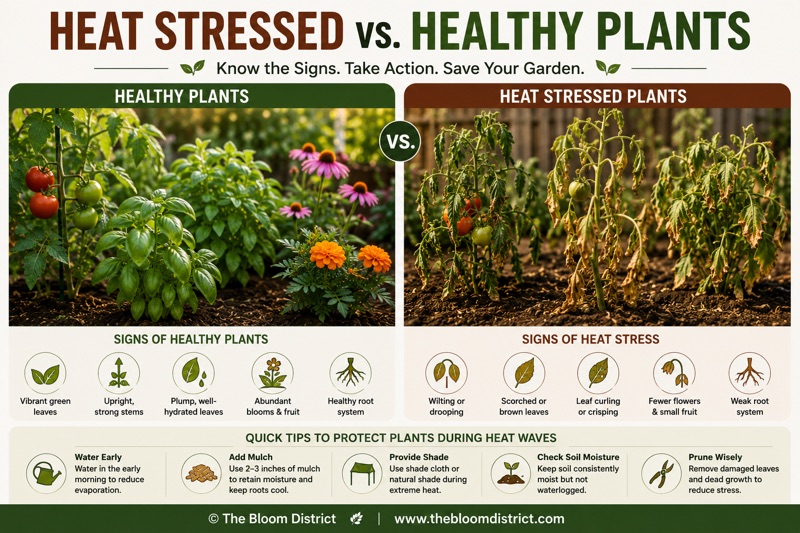
🚨 Signs Your Plants Are Overheating
Look for these early warning signs:
✅ Wilting during the hottest part of the day
✅ Brown leaf edges
✅ Crispy leaf tips
✅ Yellowing foliage
✅ Sunburned white patches
✅ Flower drop
✅ Fruit cracking
✅ Dry soil only a few hours after watering
If the plant remains wilted after sunset, it likely needs immediate attention.
🌼 Which Plants Need the Most Protection?
High-Risk Plants
- Hydrangeas
- Lettuce
- Spinach
- Basil
- Ferns
- Newly planted shrubs
- Seedlings
- Hanging baskets
- Container gardens
Moderate Risk
- Roses
- Tomatoes
- Peppers
- Cucumbers
- Blueberries
Heat-Tolerant Plants
- Lavender
- Rosemary
- Sage
- Oleander
- Bougainvillea
- Agave
- Succulents
🌞 15 Ways to Protect Plants During Heat Waves
1. Water Early in the Morning
The best time is between 5:00 AM and 9:00 AM.
Morning watering:
- Reduces evaporation
- Allows roots to absorb moisture
- Helps plants prepare for daytime heat
- Reduces fungal disease compared to evening watering
💡 Avoid watering during the hottest hours of the day whenever possible.
2. Water Deeply Instead of Frequently
Deep watering encourages roots to grow downward where the soil stays cooler and retains moisture longer.
Shallow watering often leads to weak, surface-level roots that dry out quickly.
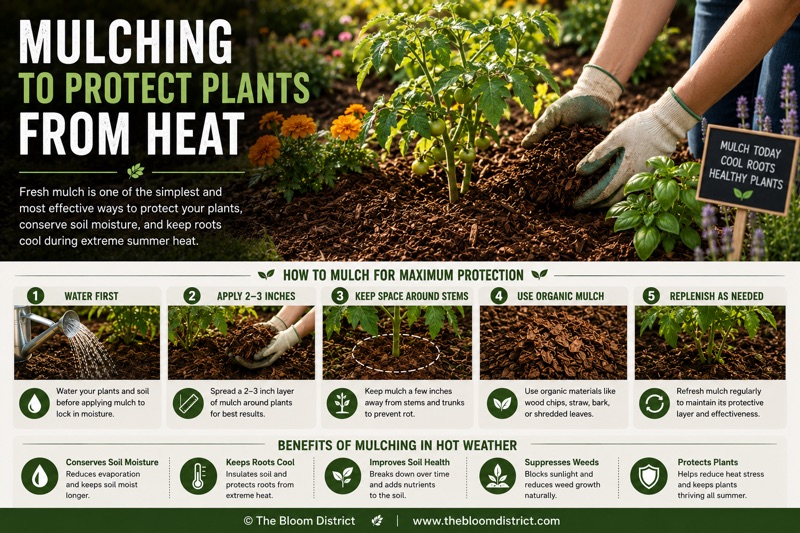
3. Add Mulch Around Plants
Mulch acts like insulation for the soil.
Benefits include:
- Conserves moisture
- Keeps roots cooler
- Reduces evaporation
- Suppresses weeds
- Improves soil health over time
Good mulch options include bark chips, straw, shredded leaves, and compost.
4. Provide Temporary Shade
Use:
- Shade cloth (30–50%)
- Patio umbrellas
- Garden fabric
- Lightweight sheets (without touching foliage)
Even a few hours of afternoon shade can prevent serious leaf scorch.
5. Skip Fertilizer During Heat Waves
Fertilizer encourages new growth, which is more vulnerable to heat stress.
Wait until temperatures return to normal before feeding your plants.
6. Delay Major Pruning
Pruning exposes stems and leaves to more direct sunlight.
Only remove:
- Dead branches
- Diseased foliage
- Broken stems
Save heavy pruning for cooler weather.
7. Increase Water for Containers
Container plants dry much faster than those planted in the ground.
On extremely hot days, they may need watering twice daily.
Check soil moisture before watering again.
8. Group Pots Together
Placing containers close together creates a more humid microclimate and slows moisture loss.
Keep the most delicate plants in the center of the group.
9. Move Sensitive Containers
Portable pots should be moved to:
- Morning sun only
- Bright shade
- Covered patios
- East-facing areas
Avoid west-facing walls that radiate heat.
10. Avoid Wetting Leaves in Strong Sun
Water droplets on leaves generally don’t “burn” plants, but wet foliage under intense heat can encourage disease if it stays damp. Direct water at the soil around the roots for the most efficient irrigation.
11. Protect Newly Planted Trees
Young trees have limited root systems.
Provide:
- Deep watering
- Thick mulch
- Tree watering bags (if available)
- Temporary shade during extreme heat
12. Harvest Vegetables Frequently
Removing ripe vegetables reduces stress on plants and encourages continued production once temperatures moderate.
13. Keep Weeds Under Control
Weeds compete with your plants for:
- Water
- Nutrients
- Space
Removing them helps conserve precious moisture.
14. Improve Airflow
Avoid overcrowding plants.
Better air circulation:
- Reduces heat buildup
- Limits fungal diseases
- Helps leaves dry naturally
15. Monitor Daily
During heat waves, inspect your garden every morning and evening.
Look for:
- Wilting
- Dry soil
- Sunburn
- Insect outbreaks
- Dropping flowers
Early intervention prevents long-term damage.
🏡 Indoor Plant Care During Heat Waves
Indoor plants can also suffer when temperatures rise.
Tips
- Move plants away from hot windows.
- Close curtains during the afternoon.
- Increase humidity using pebble trays or a humidifier.
- Keep plants away from air conditioner vents.
- Check soil moisture more frequently.
- Rotate plants for even light exposure.
🥕 Vegetable Garden Heat Protection
Heat affects vegetable crops differently.
|
Vegetable |
Heat Response |
Recommendation |
|
Lettuce |
Bolts quickly |
Provide afternoon shade |
|
Spinach |
Stops growing |
Harvest early |
|
Tomatoes |
Blossom drop |
Water consistently |
|
Peppers |
Sunscald |
Maintain leaf cover |
|
Cucumbers |
Wilt easily |
Mulch heavily |
|
Beans |
Reduced flowering |
Deep watering |
🌳 Trees and Shrubs During Heat Waves
Mature trees are more resilient, but prolonged heat can still cause stress.
Give priority to:
- Young trees (first 2–3 years)
- Recently transplanted shrubs
- Evergreen species planted this year
A slow, deep soak once or twice a week is often more beneficial than frequent light watering.
🌵 Plants That Naturally Handle Heat Well
These species are excellent choices for gardens in hot climates.
⚠️ Common Mistakes During Heat Waves
❌ Watering lightly every day
❌ Fertilizing stressed plants
❌ Heavy pruning
❌ Ignoring mulch
❌ Letting containers overheat on concrete
❌ Watering only the leaves
❌ Waiting until plants collapse before watering
🌿 Pro Gardener Tips
Create a “cool zone” in your garden by combining mulch, drip irrigation, and temporary shade. This simple strategy can reduce soil temperatures significantly and help plants recover more quickly after hot afternoons.
Use a moisture meter instead of guessing. Overwatering can be just as harmful as underwatering, especially in containers.
Protect the soil, not just the plant. Healthy, cool soil supports stronger roots, which are the key to surviving extreme weather.
❓ Frequently Asked Questions
Should I water plants every day during a heat wave?
Not necessarily. It’s better to water deeply when the soil needs it than to apply small amounts every day. Check the soil before watering.
Can plants recover from heat stress?
Yes. If roots remain healthy and the heat stress is not prolonged, many plants recover once temperatures cool and watering is adjusted.
Should I remove burned leaves?
Only if they are completely dead. Slightly damaged leaves can still produce energy for the plant.
Is afternoon watering harmful?
No. If a plant is severely wilted, watering immediately is better than waiting until the next morning. Aim the water at the soil and avoid wasting water through evaporation.
Does mulch really make a difference?
Absolutely. Mulch is one of the most effective ways to keep soil cool, reduce evaporation, and maintain consistent moisture levels.
🌼 Quick Summary
Heat waves can place significant stress on gardens, but thoughtful care can make all the difference. Water deeply in the early morning, apply a generous layer of mulch, provide temporary afternoon shade for sensitive plants, and avoid fertilizing or heavy pruning until cooler weather returns. Keep a close eye on container plants, young trees, and leafy vegetables, as they are often the first to show signs of stress. By focusing on healthy roots and consistent soil moisture, you can help your garden stay resilient even during the hottest days of summer.
Related Articles
Comments
Post a Comment