
The Best Compact Trees That Stay Beautiful Without Taking Over Your Garden
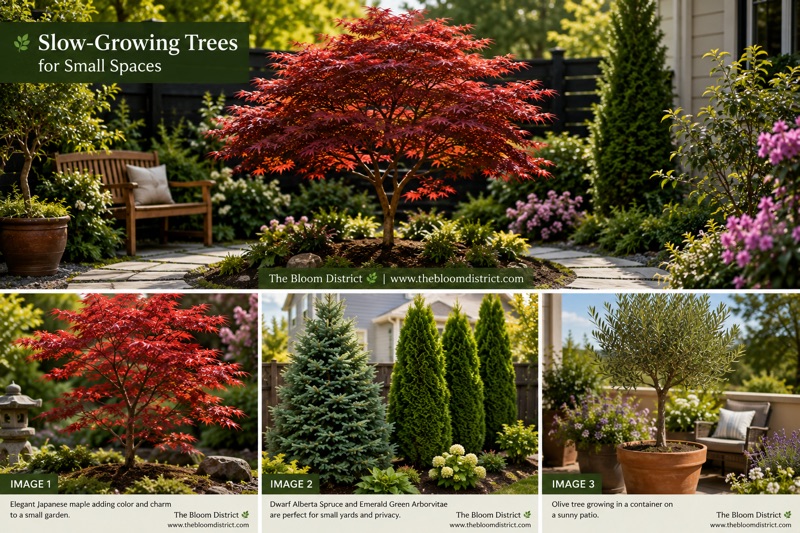
🌳 At a Glance
|
Best For |
Recommended Trees |
|
Tiny Gardens |
Japanese Maple |
|
Year-Round Greenery |
Dwarf Alberta Spruce |
|
Colorful Flowers |
Eastern Redbud |
|
Privacy |
Emerald Green Arborvitae |
|
Decorative Bark |
Japanese Stewartia |
|
Container Growing |
Olive Tree |
|
Low Maintenance |
Serviceberry |
Imagine This…
A small backyard doesn’t have to feel empty—or crowded.
The perfect tree can provide shade, seasonal color, wildlife habitat, and elegant structure without growing into power lines or overshadowing your home.
Many homeowners mistakenly plant fast-growing trees because they want instant results. Years later, those same trees become expensive problems, requiring constant pruning or even removal.
Slow-growing trees offer a smarter investment. They develop strong branches, live longer, and maintain a manageable size, making them ideal for compact gardens, patios, and urban landscapes.
Table of Contents
- Why Choose Slow-Growing Trees?
- What Makes a Tree Suitable for Small Spaces?
- Best Slow-Growing Trees
- Evergreen vs. Deciduous Trees
- Trees for Containers
- Design Tips
- Common Mistakes
- FAQ
- Quick Summary
🌱 Why Choose Slow-Growing Trees?
Slow-growing trees typically add only 6–12 inches (15–30 cm) of growth each year.
While that may seem slow, it offers several advantages:
✅ Easier maintenance
✅ Less frequent pruning
✅ Stronger branch structure
✅ Reduced risk of root damage
✅ Better fit for small landscapes
✅ Long-lasting beauty
Instead of outgrowing your yard within a decade, these trees mature gracefully over many years.
What Makes a Tree Perfect for Small Gardens?
Before buying a tree, consider these characteristics:
- Mature height under 25 feet (7.5 m)
- Narrow or compact canopy
- Non-invasive roots
- Moderate water needs
- Attractive appearance throughout the year
- Suitable for your local climate
🌳 Best Slow-Growing Trees for Small Spaces
1. Japanese Maple (
Acer palmatum
)
One of the world’s most beloved ornamental trees.
Why You’ll Love It
- Spectacular red, orange, or golden fall foliage
- Graceful branching
- Compact size
- Perfect focal point
Mature Height: 10–20 ft
Sun: Partial Sun
Growth Rate: Slow
Best For: Elegant landscapes and patios
2. Dwarf Alberta Spruce
A naturally conical evergreen that keeps its shape without much pruning.
Highlights
- Evergreen color all year
- Excellent for entryways
- Great in containers
Height: 8–12 ft
3. Eastern Redbud
One of spring’s earliest bloomers.
Its pink flowers appear before the leaves, creating a breathtaking display.
Best for:
- Pollinator gardens
- Front yards
- Cottage landscapes
4. Japanese Stewartia
An underrated ornamental tree featuring:
- White summer flowers
- Colorful autumn leaves
- Attractive peeling bark
Beautiful during every season.
5. Serviceberry
This multi-season tree offers:
- White spring flowers
- Edible berries
- Brilliant orange-red fall foliage
Birds absolutely love it.
6. Olive Tree
Ideal for warm climates and Mediterranean-style gardens.
Its silvery leaves provide elegance while maintaining a manageable size.
Excellent for:
- Containers
- Courtyards
- Sunny balconies
7. Dogwood
Dogwoods are famous for their spectacular spring blooms and colorful autumn foliage.
They fit comfortably into small residential landscapes.
8. Magnolia ‘Little Gem’
Unlike giant magnolias, this dwarf variety stays compact while producing fragrant white flowers.
Perfect for modern gardens.
9. Emerald Green Arborvitae
A narrow evergreen ideal for:
- Privacy screens
- Property borders
- Small backyards
10. Crepe Myrtle (Dwarf Varieties)
Produces months of colorful summer flowers while remaining relatively compact.
Excellent in warm climates.
11. Coral Bark Japanese Maple
Its bright red bark becomes especially striking during winter, adding year-round visual interest.
12. Weeping Cherry
Graceful cascading branches and soft spring blossoms make this one of the most elegant ornamental trees for limited spaces.
🌲 Evergreen vs. Deciduous Trees
|
Feature |
Evergreen Trees |
Deciduous Trees |
|
Leaves |
Stay year-round |
Drop in autumn |
|
Privacy |
Excellent |
Seasonal |
|
Maintenance |
Low |
Moderate |
|
Seasonal Color |
Limited |
Outstanding |
|
Wildlife Value |
High |
Very High |
🌿 Trees That Grow Well in Containers
If your space is extremely limited, these trees thrive in large pots:
- Olive Tree
- Japanese Maple
- Dwarf Citrus
- Bay Laurel
- Dwarf Alberta Spruce
Choose a container with drainage holes and refresh the soil every few years.
🎨 Design Tips for Small Gardens
To maximize visual impact:
- Place a single specimen tree as a focal point.
- Combine evergreen and flowering plants for year-round appeal.
- Add mulch around the base to retain moisture.
- Use underplantings such as hostas or ornamental grasses.
- Install landscape lighting to highlight the tree at night.
❌ Common Mistakes to Avoid
Avoid these common errors:
- Planting too close to buildings
- Ignoring mature tree size
- Overwatering newly planted trees
- Choosing species unsuitable for your climate
- Neglecting soil preparation
- Crowding multiple trees together
Planning ahead prevents costly problems later.
🌼 Seasonal Care Tips
Spring
- Apply a slow-release fertilizer.
- Inspect for pests and diseases.
- Water deeply during dry spells.
Summer
- Mulch to conserve moisture.
- Water consistently during heat waves.
Autumn
- Remove fallen leaves if diseased.
- Plant new trees while the soil is still warm.
Winter
- Protect young trees from frost and strong winds.
- Avoid heavy pruning.
Frequently Asked Questions
What is the slowest-growing ornamental tree?
Japanese Maple and Dwarf Alberta Spruce are among the slowest-growing and most manageable ornamental trees.
Can slow-growing trees be planted near a house?
Yes. Their compact size and generally less aggressive root systems make many species suitable for planting closer to homes, provided you follow recommended spacing.
Are slow-growing trees easier to maintain?
In most cases, yes. They require less pruning, are easier to shape, and are less likely to outgrow their allotted space.
Which slow-growing tree is best for privacy?
Emerald Green Arborvitae is one of the top choices for creating a narrow, evergreen privacy screen.
🌟 Quick Summary
Slow-growing trees are an excellent choice for small gardens because they provide lasting beauty without overwhelming limited spaces. Whether you prefer the colorful foliage of a Japanese Maple, the evergreen elegance of a Dwarf Alberta Spruce, or the fragrant blooms of a Little Gem Magnolia, selecting the right tree will enhance your landscape for decades with minimal maintenance.
Related Articles
Comments
Post a Comment