
How to Save an Overwatered Plant: A Step-by-Step Guide
Overwatering is one of the most common reasons houseplants decline. While many people believe giving plants extra water helps them grow, too much moisture can suffocate the roots and eventually lead to root rot.
The good news is that an overwatered plant can often recover if you act quickly.
🚨 Signs Your Plant Is Overwatered
Common symptoms include:
✔️ Yellow leaves
✔️ Soft or limp stems
✔️ Leaves dropping despite wet soil
✔️ Brown or black roots
✔️ Mold growing on the soil
✔️ Fungus gnats
✔️ A sour smell from the pot
⚠️ Why Overwatering Is Dangerous
Plant roots need oxygen as much as they need water.
When soil stays wet for too long:
❌ Roots cannot breathe.
❌ Fungi begin attacking the root system.
❌ Root rot develops.
❌ The plant slowly dies.
🛑 Step 1: Stop Watering Immediately
The first and most important step is to stop watering.
Allow the soil to dry naturally before doing anything else.
☀️ Step 2: Move the Plant to a Bright Location
Place your plant where it receives:
✅ Bright, indirect sunlight
✅ Good airflow
Avoid direct afternoon sun while the plant is recovering.
🪴 Step 3: Check the Pot Drainage
Your pot should always have drainage holes.
If it doesn’t:
• Repot the plant into a container with drainage.
• Empty any standing water from the saucer.
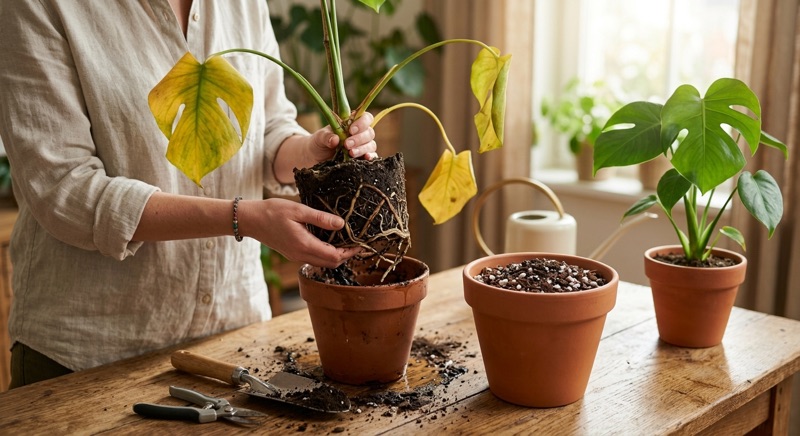
🌿 Step 4: Inspect the Roots
Healthy roots are:
✅ White
✅ Firm
✅ Fresh smelling
Damaged roots are:
❌ Brown
❌ Black
❌ Mushy
❌ Smelly
Trim all rotten roots using sterilized scissors.
🌱 Step 5: Replace the Soil
Remove the old soggy soil.
Repot using fresh well-draining soil such as:
• Potting Mix
• Perlite
• Coco Coir
• Pine Bark
🌬️ Step 6: Improve Air Circulation
Good airflow speeds up drying and reduces fungal growth.
Keep the plant away from humid, enclosed spaces.
🚫 Step 7: Don’t Fertilize Yet
Wait until you notice healthy new growth.
Fertilizing too early can stress damaged roots.
💧 Step 8: Water Correctly
Before watering again:
✔️ Check the top 2 inches (5 cm) of soil.
✔️ Use a moisture meter if available.
✔️ Water only when needed.
🪴 Plants That Hate Overwatering
These plants are especially sensitive:
🌵 Cactus
🌿 Snake Plant
🌱 ZZ Plant
🪴 Aloe Vera
🌵 Jade Plant
🌸 Orchid
🌵 Most Succulents
✅ How to Prevent Overwatering
Follow these simple tips:
✔️ Use pots with drainage holes.
✔️ Water according to soil moisture—not a schedule.
✔️ Empty saucers after watering.
✔️ Use well-draining soil.
✔️ Water less during winter.
✔️ Learn each plant’s specific watering needs.
❓ Frequently Asked Questions
🌿 Can an overwatered plant recover?
Yes. If treated early, many plants recover completely.
⏳ How long does recovery take?
Usually between 2–6 weeks, depending on the damage.
🍂 Should I remove yellow leaves?
Yes. Removing damaged leaves helps the plant focus on producing healthy new growth.
🦠 Is root rot always fatal?
No. Early treatment significantly increases the chance of recovery.
🌼 Final Thoughts
Overwatering is a mistake that almost every plant owner makes at some point. Fortunately, it is often reversible. By improving drainage, replacing saturated soil, and adopting a smarter watering routine, you can help your plant recover and thrive again.
Comments
Post a Comment