
🌿 The Secret Garden That Nature Already Designed
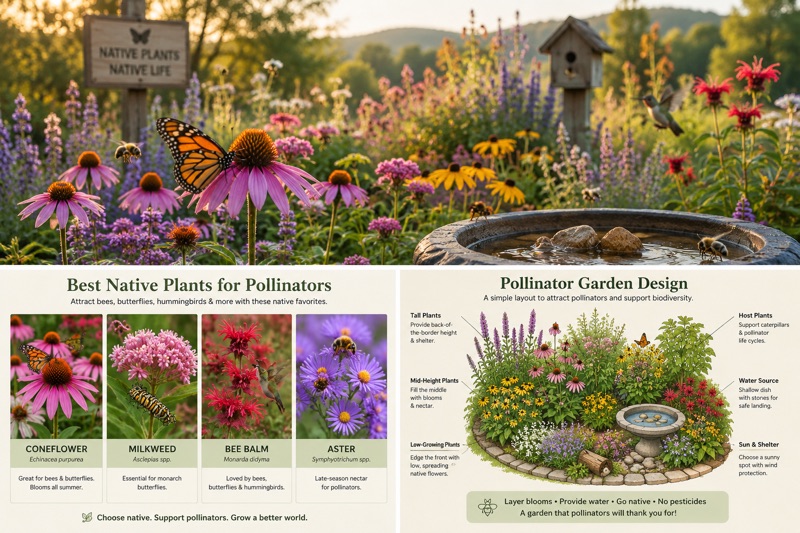
Imagine stepping into your garden early in the morning.
The air is fresh. Tiny drops of dew sparkle on colorful flowers. A butterfly gently lands on a purple bloom, bees move from flower to flower collecting nectar, and birds visit the garden searching for seeds.
This is not just a beautiful landscape.
It is a living ecosystem.
Many modern gardens look attractive but offer little food for wildlife. Large lawns, decorative plants from other regions, and chemical treatments have reduced the natural spaces where pollinators can survive.
But there is a simple solution:
Plant native species.
Native plants have evolved alongside local bees, butterflies, birds, and other wildlife for hundreds or even thousands of years. They provide the right food, shelter, and timing that local pollinators need.
By choosing the right native plants, your garden can become a small sanctuary full of movement, color, and life.
🐝 Why Native Plants Are Important for Pollinators
Pollinators play a critical role in nature.
Bees, butterflies, moths, hummingbirds, and other animals transfer pollen between flowers, allowing plants to produce seeds and fruits.
Without pollinators:
- Many fruits and vegetables would become less available
- Wild plants would struggle to reproduce
- Biodiversity would decline
Native plants help because they provide:
|
Benefit |
Why It Matters |
|
🌸 Natural food source |
Local pollinators recognize and use native flowers easily |
|
🐝 More nectar |
Many native flowers produce rich nectar for bees and butterflies |
|
🌱 Better adaptation |
Native plants survive local weather conditions |
|
🦋 Habitat support |
They provide shelter and breeding areas |
|
💧 Lower maintenance |
They usually need less water and care |
🌺 Native Plants vs Non-Native Plants
Not every beautiful flower is helpful for wildlife.
Some exotic plants may produce attractive flowers but provide little nutritional value for native pollinators.
|
Native Plants |
Non-Native Plants |
|
Designed for local ecosystems |
May not support local wildlife |
|
Require less water |
Often need extra care |
|
Support more insects and birds |
Sometimes offer limited benefits |
|
Adapt naturally |
May struggle in local conditions |
A pollinator garden is not only about beauty.
It is about creating a relationship with nature.
🌼 Best Native Plants That Attract Pollinators
The best plants depend on your region, climate, and soil.
However, these groups are among the most popular choices for pollinator gardens.
1. Coneflower (Echinacea) 🌸
Best for: Bees, butterflies, birds
Coneflowers are one of the most recognizable pollinator plants. Their large colorful blooms provide a landing platform for butterflies and a rich nectar source for bees.
Why gardeners love it:
✓ Long flowering season
✓ Drought tolerant
✓ Easy for beginners
✓ Beautiful purple, pink, and white flowers
Garden Tip:
Leave some seed heads during winter because birds enjoy eating the seeds.
2. Milkweed (Asclepias) 🦋
Best for: Monarch butterflies
Milkweed is one of the most important plants for butterfly conservation.
Monarch butterflies lay their eggs on milkweed because their caterpillars depend on this plant for survival.
Benefits:
- Supports butterfly life cycles
- Produces colorful flowers
- Attracts many types of insects
Important:
Plant milkweed that is native to your area because different regions have different species.
3. Black-Eyed Susan (Rudbeckia) 🌻
Best for: Bees and butterflies
With bright yellow petals surrounding a dark center, Black-Eyed Susan adds a cheerful summer display.
It is:
✓ Heat tolerant
✓ Low maintenance
✓ Excellent for sunny gardens
This plant works beautifully in wildflower gardens and borders.
4. Bee Balm (Monarda) 🌺
Best for: Bees, butterflies, hummingbirds
Despite its name, Bee Balm attracts many pollinators.
Its unique flowers provide an excellent nectar source, especially for hummingbirds.
Growing benefits:
- Beautiful red, pink, or purple blooms
- Fragrant leaves
- Great cottage garden plant
🌻 More Native Plants That Welcome Pollinators
5. Goldenrod (Solidago) 🌼
Best for: Bees, butterflies, and beneficial insects
Goldenrod is often misunderstood because many people associate it with allergies. However, goldenrod pollen is usually not responsible for seasonal allergies (which are commonly caused by ragweed).
This native plant is a late-season hero because it provides food when many other flowers have finished blooming.
Why add Goldenrod to your garden?
✓ Blooms in late summer and fall
✓ Supports migrating butterflies
✓ Provides important late-season nectar
✓ Extremely hardy and drought tolerant
Garden Tip:
Plant goldenrod near other late-blooming flowers to create a continuous food source for pollinators.
6. Asters (Symphyotrichum) 💜
Best for: Bees and butterflies
Asters are one of the most valuable fall flowers for pollinators.
When many gardens begin losing color, asters continue blooming and provide essential nectar before winter arrives.
Benefits:
- Long flowering period
- Many native varieties available
- Attractive purple, blue, and pink flowers
- Excellent companion plant for goldenrod
7. Native Sunflowers (Helianthus) 🌻
Best for: Bees, butterflies, and birds
Native sunflowers bring energy and movement into any garden.
Their large flower heads attract pollinators during summer and later provide seeds for birds.
Growing advantages:
✓ Loves full sun
✓ Easy to grow from seeds
✓ Supports many insect species
✓ Creates a natural garden appearance
8. Wild Columbine (Aquilegia canadensis) 🌺
Best for: Hummingbirds and bees
With its unique hanging flowers, wild columbine is designed for specialized pollinators.
Its tubular flowers are especially attractive to hummingbirds.
Perfect for:
- Woodland gardens
- Partial shade areas
- Natural landscapes
🦋 Best Native Plants Based on Pollinator Type
Different pollinators prefer different flowers.
Creating diversity is the key to a successful wildlife garden.
|
Pollinator |
Favorite Plant Types |
Garden Benefit |
|
🐝 Bees |
Coneflower, Bee Balm, Asters |
Rich nectar and pollen sources |
|
🦋 Butterflies |
Milkweed, Black-Eyed Susan, Phlox |
Supports feeding and reproduction |
|
🐧 Hummingbirds |
Bee Balm, Columbine, Cardinal Flower |
Tubular flowers provide nectar |
|
🐞 Beneficial insects |
Goldenrod, Native wildflowers |
Helps natural pest control |
🌱 How to Design a Pollinator-Friendly Garden
A pollinator garden does not need to be large.
Even a balcony, small yard, or container garden can support wildlife.
The goal is to create a space that provides:
Food + Water + Shelter + Safety
Step 1: Choose Plants That Bloom Throughout the Year 🌸
One common mistake is planting flowers that bloom at the same time.
After a few weeks, the garden becomes empty
Instead, create a blooming calendar:
|
Season |
Recommended Plants |
|
🌱 Spring |
Wild Columbine, Native Phlox |
|
☀️Summer |
Coneflower, Bee Balm, Sunflowers |
|
🍂 Fall |
Asters, Goldenrod, Native Sedum |
|
❄️ Winter |
Seed heads for birds and insects |
A garden that blooms continuously becomes a reliable food source.
Step 2: Plant in Groups Instead of Single Flowers
Pollinators find large groups of flowers more easily than scattered individual plants.
Instead of planting:
❌ One coneflower here
❌ One bee balm there
Create clusters:
✅ 5–10 plants together
This creates a stronger visual impact and helps insects save energy while searching for food.
Step 3: Add Water Sources 💧
Pollinators need water too.
Simple ideas:
- A shallow birdbath
- A small bowl with stones
- A water dish for butterflies
Important:
Always add rocks or pebbles so insects can land safely.
Step 4: Avoid Harmful Chemicals
A beautiful garden should also be a safe garden.
Some pesticides can harm beneficial insects, including bees and butterflies.
Instead, use natural approaches:
🌿 Encourage beneficial insects
🌿 Remove pests manually
🌿 Use companion planting
🌿 Improve soil health
Remember:
A garden full of insects is not a failed garden.
It is a healthy ecosystem.
🌿 Common Mistakes When Creating a Pollinator Garden
Mistake 1: Choosing Flowers Only for Appearance
A plant may look beautiful but provide little value to wildlife.
Better choice:
Research whether the plant supports native pollinators.
Mistake 2: Planting Only One Flower Type
A single species cannot support all pollinators.
Solution:
Mix:
- Different flower shapes
- Different colors
- Different blooming seasons
Mistake 3: Cleaning the Garden Too Much
Many gardeners remove everything in autumn.
However, dead stems and seed heads provide:
- Winter shelter
- Nesting spaces
- Food for birds
Leave some natural areas until spring.
🌸 Easy Pollinator Garden Layout Example
Small Backyard Design
🌻 Sunflowers 🐝 Bee Balm
🌸 Coneflowers 🦋 Milkweed
💜 Asters 🌼 Goldenrod
💧 Water Source
This simple design creates:
✓ Color
✓ Wildlife habitat
✓ Low maintenance beauty
🌎 Native Plants Around the World
Native plants depend on your location.
Examples:
|
Region |
Popular Pollinator Plants |
|
North America |
Coneflower, Milkweed, Bee Balm |
|
United Kingdom |
Foxglove, Lavender, Wild Marjoram |
|
Mediterranean Regions |
Sage, Thyme, Rosemary |
|
Australia |
Bottlebrush, Kangaroo Paw |
|
Dry Climates |
Desert Marigold, Native Salvias |
Tip:
Always choose plants naturally adapted to your local climate.
🌱 Pollinator Garden Maintenance Calendar
A pollinator garden is not about constant work.
The goal is to create a balanced environment where plants and wildlife can support each other.
Here is a simple seasonal care plan:
|
Season |
Garden Tasks |
Pollinator Benefits |
|
🌸 Spring |
Remove only damaged stems, add compost, plant new flowers |
Provides fresh nectar after winter |
|
☀️ Summer |
Water during drought, remove invasive weeds, enjoy blooms |
Creates a reliable food source |
|
🍂 Fall |
Leave seed heads, plant fall flowers, avoid excessive cleanup |
Supports migrating butterflies and birds |
|
❄️ Winter |
Keep dry stems, protect soil, plan next season |
Provides shelter for insects |
🌼 How to Make Your Garden More Attractive to Pollinators
Adding flowers is only the beginning.
A truly successful pollinator garden includes different layers of nature.
1. Add Different Flower Shapes 🌸
Different pollinators have different feeding styles.
For example:
- 🐝 Bees prefer open flowers where they can easily collect pollen
- 🦋 Butterflies prefer flat flowers where they can land comfortably
- 🐦 Hummingbirds prefer tubular flowers
A diverse garden attracts a wider range of visitors.
2. Include Fragrant Plants 🌿
Many pollinators use scent to locate flowers.
Great fragrant options include:
- Native mint varieties
- Wild thyme
- Sage
- Bee balm
Fragrance also adds another sensory experience to your garden.
3. Create Shelter Areas 🪵
Pollinators need safe places to rest and reproduce.
You can help by adding:
- Native shrubs
- Tall grasses
- Small rock areas
- Undisturbed corners
A slightly wild garden is often healthier than a perfectly clean one.
🐝 Pollinator Garden Checklist
Before planting, ask yourself:
✅ Do I have flowers blooming in different seasons?
✅ Did I choose plants native to my area?
✅ Are plants grouped together?
✅ Is there a water source nearby?
✅ Am I avoiding harmful chemicals?
✅ Do I provide shelter for insects and birds?
If you answered yes to most of these questions, your garden is already becoming a wildlife-friendly space.
🌺 Frequently Asked Questions (FAQ)
What are the best native plants for bees?
Some of the best choices include:
- Coneflowers
- Bee balm
- Native sunflowers
- Asters
- Goldenrod
These plants provide abundant nectar and pollen throughout the growing season.
Do pollinator gardens require a lot of maintenance?
No.
Native plants are usually adapted to local conditions, meaning they often need:
- Less watering
- Less fertilizer
- Less protection
Once established, many native gardens become easier to maintain than traditional flower beds.
Can I create a pollinator garden in a small space?
Absolutely.
You can attract pollinators using:
- Balcony containers
- Window boxes
- Small raised beds
- Patio gardens
Even a few native flowering plants can provide valuable resources.
Are butterflies attracted only to colorful flowers?
No.
Color helps, but butterflies also depend on:
- Nectar availability
- Flower shape
- Plant location
- Sun exposure
A healthy mix of native plants is more important than color alone.
Should I remove dead flowers after blooming?
Not always.
Leaving some flowers can help because:
🌱 Seed heads feed birds
🐞 Stems provide insect shelter
🌿 Natural materials protect the garden ecosystem
A little mess can create more life.
🌎 Creating a Pollinator Garden in Dry Climates
For gardeners living in hot or dry regions, choosing the right plants is especially important.
Look for:
✓ Drought-tolerant native plants
✓ Deep-rooted species
✓ Heat-resistant flowers
✓ Plants that need less irrigation
Examples of suitable choices in dry climates may include native:
- Salvias
- Penstemons
- Desert wildflowers
- Native grasses
The key is working with your climate, not against it.
🌿 Final Thoughts: Let Your Garden Become a Living Place
A garden is more than a collection of beautiful plants.
It is a meeting place between humans and nature.
When you choose native plants that attract pollinators, you are creating:
🌸 A colorful landscape
🐝 A safe home for bees
🦋 A refuge for butterflies
🐦 A healthier ecosystem
Even one native flower can make a difference.
Your garden does not need to be perfect.
It only needs to be alive.
Grow beauty. Support nature. Create a garden that tells a story.
—
The Bloom District 🌿
Related Articles
Comments
Post a Comment