
The Ultimate Guide to Beautiful, Water-Wise🌵
Why Choose Drought-Tolerant Plants?
As temperatures continue to rise and water conservation becomes increasingly important, drought-tolerant plants are becoming the foundation of modern landscaping. These resilient plants have adapted to survive with minimal irrigation while still providing vibrant flowers, attractive foliage, and year-round beauty.
Whether you live in California, Arizona, Texas, Southern Europe, or any region experiencing dry summers, selecting drought-resistant plants can dramatically reduce maintenance while creating a healthier and more sustainable garden.
Unlike thirsty lawn grasses and water-demanding flowers, drought-tolerant species develop deep root systems, waxy leaves, or water-storing tissues that help them thrive during extended dry periods.
🌍 Benefits of Water-Wise Gardening
Choosing drought-tolerant plants offers numerous advantages beyond simply saving water.
💧 Lower Water Bills
These plants require significantly less irrigation, helping homeowners reduce monthly water costs.
🌎 Environmentally Friendly
Using less water supports sustainable gardening and reduces pressure on local water supplies.
🌱 Less Maintenance
Many drought-tolerant plants require less pruning, fertilizing, and overall care.
🌸 Longer Blooming Seasons
Many drought-resistant flowers continue blooming even during hot summers.
🐝 Supports Pollinators
Numerous drought-tolerant species attract bees, butterflies, and hummingbirds.
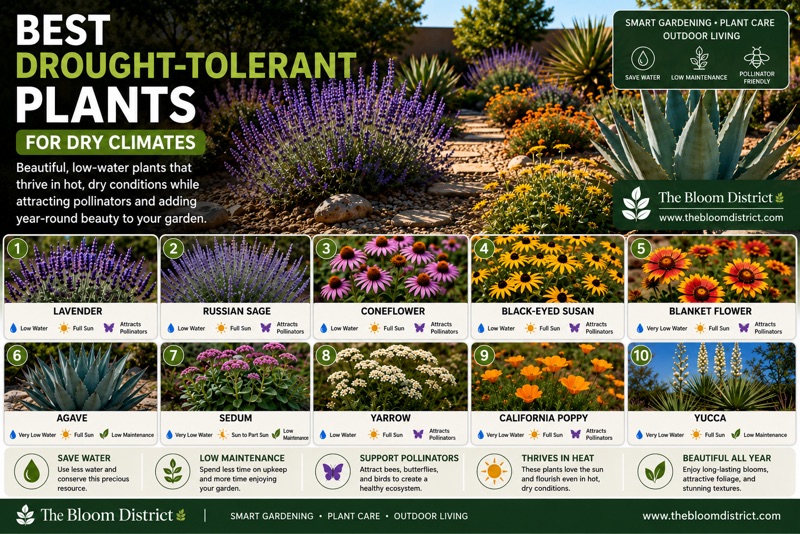
🌼 Best Drought-Tolerant Plants for Dry Climates
💜 1. Lavender
Lavender is one of the world’s most popular drought-resistant plants.
Why Gardeners Love It
- Fragrant flowers
- Beautiful purple blooms
- Attracts bees
- Deer resistant
- Excellent for borders
Growing Conditions
- Full sun
- Well-drained soil
- Water only occasionally after establishment
🌾 2. Russian Sage
Russian Sage produces clouds of lavender-blue flowers throughout summer.
Benefits
- Extremely heat tolerant
- Long blooming season
- Silver foliage
- Pollinator favorite
- Low maintenance
Perfect for:
- Cottage gardens
- Modern landscapes
- Xeriscaping
🌺 3. Coneflower (Echinacea)
Coneflowers thrive in dry soils while adding vibrant color to the landscape.
Advantages
- Large colorful flowers
- Long blooming
- Excellent cut flower
- Attracts butterflies
- Seed heads feed birds in winter
🌼 4. Black-Eyed Susan
This cheerful native wildflower tolerates heat better than many traditional garden flowers.
Highlights
- Bright yellow blooms
- Easy to grow
- Long flowering period
- Pollinator friendly
- Excellent for beginners
🌸 5. Blanket Flower
Blanket Flowers bloom continuously through hot summers.
Why Choose It?
- Loves poor soil
- Requires little watering
- Bright red and yellow flowers
- Excellent drought resistance
- Compact growth
🌵 6. Agave
Agave is famous for its dramatic architectural appearance.
Ideal For
- Desert landscapes
- Rock gardens
- Modern gardens
Care
- Almost no watering once established
- Full sun
- Excellent drainage
🌿 7. Sedum (Stonecrop)
Sedum is among the easiest drought-tolerant plants to grow.
Features
- Thick succulent leaves
- Colorful flowers
- Ground cover options
- Container friendly
- Extremely hardy
🌺 8. Yarrow
Yarrow produces flat clusters of colorful flowers while thriving in dry soils.
Benefits
- Heat resistant
- Long flowering
- Medicinal history
- Attracts butterflies
- Deer resistant
🌼 9. California Poppy
California Poppies create brilliant orange displays even in poor soils.
Best Features
- Self-seeding
- Low water
- Fast growing
- Native wildflower
- Perfect for natural gardens
🌴 10. Yucca
Yucca plants bring dramatic texture to drought-tolerant landscapes.
Advantages
- Evergreen
- Architectural foliage
- White flower spikes
- Extremely heat tolerant
- Nearly maintenance-free
🌳 Best Trees for Dry Climates
Some trees are naturally adapted to withstand prolonged drought.
Excellent choices include:
- Olive Tree
- Desert Willow
- Palo Verde
- Crape Myrtle
- Eastern Redbud
- Mesquite
- Arizona Cypress
These trees provide shade while requiring significantly less water than traditional landscape trees.
🌿 Best Shrubs for Dry Gardens
Great drought-tolerant shrubs include:
- Rosemary
- Texas Sage
- Rock Rose
- Juniper
- Heavenly Bamboo
- Bush Germander
They provide year-round structure with minimal irrigation.
🌾 Best Ornamental Grasses
Ornamental grasses add movement and texture while thriving in dry conditions.
Top choices:
- Blue Fescue
- Mexican Feather Grass
- Switchgrass
- Little Bluestem
- Fountain Grass
These grasses require very little care once established.
🌱 Caring for Drought-Tolerant Plants
One of the biggest misconceptions about drought-tolerant plants is that they thrive on neglect. While these plants require less water than many traditional garden varieties, they still need proper care—especially during their first growing season.
💧 Water Deeply, but Infrequently
Instead of watering a little every day, give plants a deep soak once the soil has dried out. This encourages roots to grow deeper into the ground, making plants more resilient during dry spells.
Tip: Water early in the morning to reduce evaporation and give roots time to absorb moisture before the day’s heat.
🌞 Choose the Right Location
Most drought-tolerant plants perform best in:
- Full sun (6–8+ hours daily)
- Open areas with good air circulation
- Well-draining soil
Avoid planting sun-loving species in shady or damp locations, where they may become weak or prone to disease.
🌿 Improve Soil Drainage
Many drought-resistant plants dislike soggy roots more than dry soil.
To improve drainage:
- Mix coarse sand or gravel into heavy clay soil.
- Add compost to improve soil structure without retaining excessive moisture.
- Consider raised beds if drainage is poor.
🍂 Apply Mulch
A 2–3 inch (5–8 cm) layer of organic mulch helps:
- Retain soil moisture
- Keep roots cooler
- Reduce weed growth
- Prevent soil erosion
- Improve soil over time
Suitable mulch materials include bark chips, shredded wood, pine needles, or gravel for desert-style gardens.
✂️ Prune at the Right Time
Remove dead or damaged growth regularly to improve airflow and encourage healthy new growth.
For flowering shrubs and perennials, prune after blooming unless the plant flowers on new wood.
⚠️ Common Mistakes to Avoid
Even drought-tolerant plants can struggle if they’re not given the right conditions.
❌ Overwatering
The most common mistake is watering too frequently.
Signs include:
- Yellow leaves
- Soft stems
- Root rot
- Fungal diseases
Allow the soil to dry between watering sessions.
❌ Poor Drainage
Standing water around the roots can quickly kill plants adapted to dry conditions.
Always choose well-drained soil or improve drainage before planting.
❌ Too Much Fertilizer
Excess fertilizer encourages rapid, weak growth that requires more water and is less drought-resistant.
Feed sparingly and use a balanced, slow-release fertilizer only if necessary.
❌ Planting Too Close Together
Crowded plants compete for limited water and nutrients while reducing airflow.
Follow recommended spacing guidelines to promote healthy growth.
❌ Ignoring the Establishment Period
Most drought-tolerant plants need regular watering during their first year while roots develop.
Once established, they become much more resilient.
📊 Comparison Table
|
Plant |
Sun |
Water Needs |
Height |
Pollinator Friendly |
Maintenance |
|
Lavender |
Full Sun |
Very Low |
2-3 ft |
⭐️⭐️⭐️⭐️⭐️ |
Easy |
|
Russian Sage |
Full Sun |
Very Low |
3-5 ft |
⭐️⭐️⭐️⭐️⭐️ |
Easy |
|
Coneflower |
Full Sun |
Low |
2-4 ft |
⭐️⭐️⭐️⭐️⭐️ |
Easy |
|
Black-Eyed Susan |
Full Sun |
Low |
2-3 ft |
⭐️⭐️⭐️⭐️ |
Easy |
|
Blanket Flower |
Full Sun |
Very Low |
1-2 ft |
⭐️⭐️⭐️⭐️ |
Very Easy |
|
Agave |
Full Sun |
Extremely Low |
2-6 ft |
⭐️⭐️ |
Very Easy |
|
Sedum |
Sun–Part Sun |
Very Low |
6-24 in |
⭐️⭐️⭐️⭐️ |
Very Easy |
|
Yarrow |
Full Sun |
Low |
2-3 ft |
⭐️⭐️⭐️⭐️⭐️ |
Easy |
|
California Poppy |
Full Sun |
Very Low |
12-18 in |
⭐️⭐️⭐️⭐️ |
Very Easy |
|
Yucca |
Full Sun |
Extremely Low |
2-10 ft |
⭐️⭐️ |
Very Easy |
🌿 Best Plants by Purpose
🏡 Best for Front Yards
- Lavender
- Coneflower
- Black-Eyed Susan
- Russian Sage
🪴 Best for Containers
- Sedum
- Agave
- Lavender
- Yucca
🌄 Best for Rock Gardens
- Agave
- Sedum
- California Poppy
- Blue Fescue
🌱 Best Ground Covers
- Creeping Sedum
- Ice Plant
- Thyme
🛡️ Best for Privacy
- Arizona Cypress
- Juniper
- Desert Willow
- Texas Sage
❓ Frequently Asked Questions (FAQ)
Can drought-tolerant plants survive without watering?
Once established, many can survive long periods with little supplemental water. However, extended droughts may still require occasional deep watering.
Do drought-tolerant plants need fertilizer?
Usually very little. Over-fertilizing often leads to excessive growth and reduced drought resistance.
Which drought-tolerant plant blooms the longest?
Russian Sage, Blanket Flower, and Lavender are among the longest-blooming choices in sunny gardens.
Are drought-tolerant plants suitable for containers?
Yes. Plants such as Sedum, Agave, Lavender, and Yucca perform exceptionally well in containers with good drainage.
What’s the difference between drought-tolerant and drought-resistant?
“Drought-tolerant” plants can withstand dry conditions after establishment, while “drought-resistant” is often used more broadly in gardening. In practice, the terms are frequently used interchangeably.
📋 Quick Summary
|
Topic |
Key Takeaway |
|
Best Overall Plant |
Lavender |
|
Best Flower |
Coneflower |
|
Best Succulent |
Agave |
|
Best Ground Cover |
Sedum |
|
Best Tree |
Olive Tree |
|
Best Shrub |
Texas Sage |
|
Best for Pollinators |
Yarrow |
|
Best for Beginners |
Black-Eyed Susan |
💡 Pro Tips
- 🌞 Group plants with similar water needs together.
- 💧 Water deeply rather than frequently.
- 🍂 Apply mulch to reduce evaporation.
- 🌱 Plant during spring or fall to help roots establish before extreme temperatures.
- 🌿 Choose native drought-tolerant species whenever possible—they’re often better adapted to local conditions and support local wildlife.
🌿 Conclusion
Creating a beautiful garden doesn’t have to mean using large amounts of water. By selecting drought-tolerant plants that are well-suited to your local climate, you can enjoy vibrant flowers, attractive foliage, and year-round interest while reducing maintenance and conserving one of our most valuable resources.
Whether you’re designing a new xeriscape, refreshing an existing landscape, or simply looking to lower your water bills, plants like Lavender, Russian Sage, Coneflower, Sedum, and Agave offer reliable beauty with minimal effort. Start with a few well-chosen species, provide the right growing conditions, and you’ll build a resilient, sustainable garden that flourishes even through the hottest, driest seasons.
Related Articles
Comments
Post a Comment