
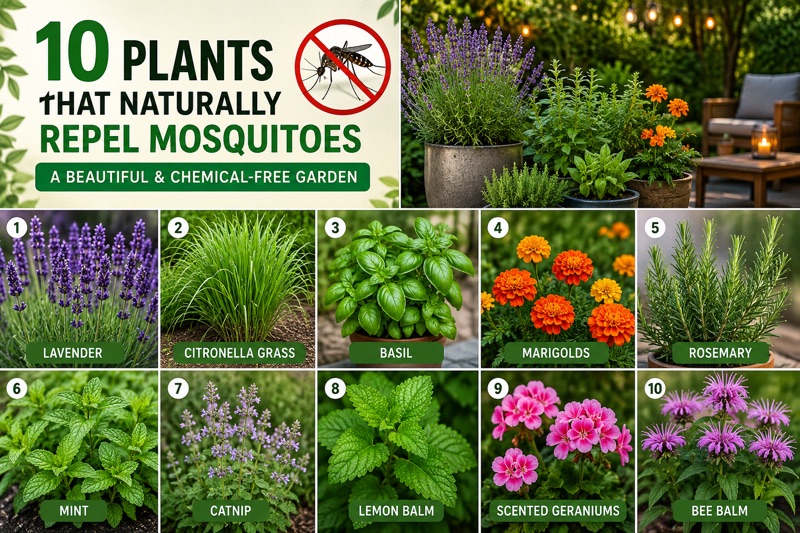
Mosquitoes can quickly turn a relaxing evening in your garden into an uncomfortable experience. While chemical insect repellents may offer temporary relief, many gardeners are now choosing natural solutions that are safer for children, pets, and the environment.
Fortunately, several attractive plants produce natural oils and fragrances that mosquitoes dislike. By adding these plants to your landscape, patio, or balcony, you can create a more enjoyable outdoor space while enhancing the beauty of your garden.
In this guide, you’ll discover ten of the best mosquito-repelling plants, learn why they work, and get practical tips for growing them successfully.
1. Lavender (Lavandula)
Lavender is one of the most popular flowering plants in the world. Its calming fragrance is loved by people but disliked by mosquitoes.
Why It Works
Lavender contains essential oils such as linalool and linalyl acetate, which naturally repel mosquitoes and several other flying insects.
Growing Tips
- Plant in full sun.
- Use well-drained soil.
- Water only when the soil becomes dry.
- Prune after flowering to encourage new growth.
Best Locations
- Garden borders
- Walkways
- Patio containers
- Outdoor seating areas
2. Citronella Grass (Cymbopogon nardus)
Citronella is famous for its strong lemon scent and is commonly used in candles, sprays, and natural insect repellents.
Why It Works
Its aromatic oils mask the scents that attract mosquitoes, making it one of the most effective natural deterrents.
Growing Tips
- Requires plenty of sunlight.
- Prefers warm climates.
- Keep the soil consistently moist but not waterlogged.
- Protect from frost in colder regions.
Best Locations
- Large containers
- Patio entrances
- Around decks
- Backyard seating areas
3. Basil (Ocimum basilicum)
Basil isn’t just a delicious culinary herb—it also serves as an excellent mosquito-repelling plant.
Why It Works
The strong aroma released by basil leaves helps discourage mosquitoes while attracting beneficial pollinators like bees.
Growing Tips
- Provide 6–8 hours of sunlight daily.
- Harvest leaves regularly to encourage bushier growth.
- Water consistently without soaking the soil.
Best Locations
- Kitchen gardens
- Window boxes
- Containers near doors
- Outdoor dining spaces
4. Marigolds (Tagetes)
Marigolds add vibrant color to any garden while helping to keep unwanted insects away.
Why They Work
These cheerful flowers contain pyrethrum, a natural compound often used in environmentally friendly insect repellents.
Growing Tips
- Thrive in full sunlight.
- Remove faded flowers to promote continuous blooming.
- Water moderately.
Best Locations
- Vegetable gardens
- Flower beds
- Garden borders
- Raised garden beds
5. Rosemary (Salvia rosmarinus)
Rosemary is an evergreen herb with fragrant leaves that naturally deter mosquitoes.
Why It Works
Its woody aroma contains essential oils that insects find unpleasant.
Growing Tips
- Plant in full sun.
- Use sandy, well-drained soil.
- Avoid overwatering.
- Prune regularly to maintain shape.
Best Locations
- Herb gardens
- Patio containers
- Rock gardens
- Garden pathways
6. Mint (Mentha spp.)
Mint is one of the easiest herbs to grow and is well known for its refreshing scent. While people enjoy its cool fragrance, mosquitoes tend to avoid it.
Why It Works
Mint leaves contain menthol and other aromatic compounds that help repel mosquitoes and some other garden pests. Crushing a few leaves releases an even stronger scent.
Growing Tips
- Grow in partial to full sun.
- Keep the soil evenly moist.
- Plant mint in containers, as it spreads aggressively in garden beds.
- Harvest regularly to encourage fresh growth.
Best Locations
- Patio pots
- Balcony planters
- Outdoor dining areas
- Near windows and doorways
7. Catnip (Nepeta cataria)
Catnip is famous for attracting cats, but it also has impressive mosquito-repelling properties.
Why It Works
Catnip contains nepetalactone, a natural compound that research has shown can be highly effective at repelling mosquitoes.
Growing Tips
- Plant in full sun or light shade.
- Prefers well-drained soil.
- Trim after flowering to encourage a second bloom.
- Water moderately.
Best Locations
- Cottage gardens
- Pollinator gardens
- Garden borders
- Containers
8. Lemon Balm (Melissa officinalis)
Lemon balm belongs to the mint family and produces a pleasant citrus fragrance that many people find refreshing.
Why It Works
Its leaves contain citronellal and other natural oils that help discourage mosquitoes while attracting bees and butterflies.
Growing Tips
- Grows well in full sun or partial shade.
- Keep the soil moist but not soggy.
- Trim regularly to prevent excessive spreading.
Best Locations
- Herb gardens
- Patio containers
- Raised beds
- Near seating areas
9. Scented Geraniums (Pelargonium citrosum)
Often called the “mosquito plant,” scented geraniums feature decorative foliage and a lemon-like aroma.
Why They Work
The leaves release fragrant oils that may help reduce mosquito activity around outdoor spaces, especially when brushed or gently crushed.
Growing Tips
- Place in full sunlight.
- Allow the soil to dry slightly between waterings.
- Protect from freezing temperatures.
Best Locations
- Hanging baskets
- Porch containers
- Balcony gardens
- Entryways
10. Bee Balm (Monarda didyma)
Bee balm is a colorful perennial that attracts hummingbirds, butterflies, and bees while helping create a healthier garden ecosystem.
Why It Works
Its aromatic leaves contain natural oils that mosquitoes generally avoid.
Growing Tips
- Grow in full sun or partial shade.
- Keep the soil consistently moist.
- Divide mature plants every few years to maintain healthy growth.
Best Locations
- Pollinator gardens
- Cottage gardens
- Mixed flower borders
- Wildlife-friendly landscapes
How to Create a Mosquito-Resistant Garden
Growing mosquito-repelling plants works best when combined with good garden maintenance.
Here are a few practical tips:
- Group fragrant plants around patios, decks, and outdoor seating areas.
- Remove standing water from buckets, birdbaths, and plant saucers to eliminate mosquito breeding sites.
- Prune plants regularly to improve airflow.
- Keep lawns trimmed and remove piles of leaves or garden debris.
- Mix herbs, flowers, and shrubs to create a diverse and attractive landscape.
Remember that no plant can completely eliminate mosquitoes on its own. These plants are most effective as part of a broader strategy that includes removing breeding areas and maintaining a healthy garden.
Common Mistakes to Avoid
Many gardeners expect immediate results after planting mosquito-repelling plants. To get the best performance, avoid these common mistakes:
- Planting only one type of mosquito-repelling plant.
- Allowing standing water to collect in the garden.
- Growing sun-loving plants in deep shade.
- Overwatering herbs like rosemary and lavender.
- Neglecting pruning and regular maintenance.
Frequently Asked Questions
Do mosquito-repelling plants really work?
Many aromatic plants produce natural compounds that mosquitoes dislike. While they won’t eliminate mosquitoes completely, they can help reduce their presence, especially when planted near outdoor living spaces.
Which plant is the most effective?
Citronella grass is widely recognized as one of the best natural mosquito-repelling plants, but combining several fragrant species often provides better overall results.
Can these plants be grown in containers?
Yes. Lavender, basil, mint, rosemary, scented geraniums, and lemon balm all grow well in pots, making them ideal for balconies, patios, and small gardens.
Are these plants safe for pets?
Some plants may be irritating or toxic to certain pets if ingested. Always research individual species before planting if you have curious dogs or cats.
Conclusion
Creating a beautiful, chemical-free garden is easier than you might think. By choosing fragrant plants like lavender, citronella grass, basil, rosemary, mint, and bee balm, you can enjoy a more comfortable outdoor space while adding color, texture, and biodiversity to your landscape.
Although these plants are not a complete solution, they are a natural and environmentally friendly way to help reduce mosquito activity. Combine them with good garden care, remove standing water, and encourage healthy plant growth to create an inviting garden that both you and beneficial pollinators will enjoy throughout the growing season.
Related Articles
Comments
Post a Comment